

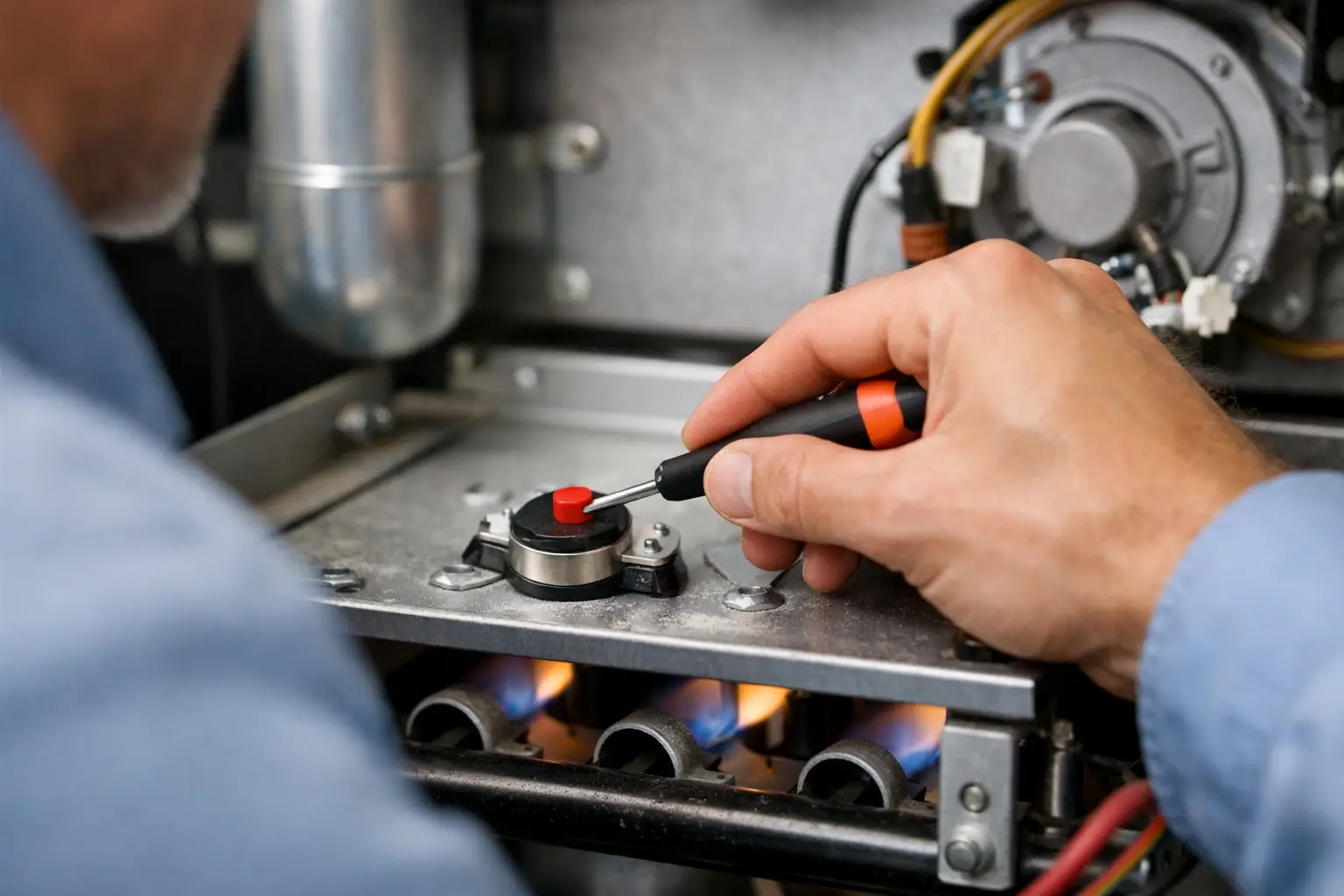
A furnace that starts, shuts down, and leaves you with cold air or no heat can make anyone want a quick fix. But before you learn how to reset furnace limit switch components, understand what that switch is protecting. A limit switch does not trip for no reason. It is responding to unsafe heat, poor airflow, or a combustion-related problem that needs attention.
Some furnace safety switches reset themselves after the unit cools. Others have a small manual reset button. Pressing that button may get the system running temporarily, but it does not correct the reason it tripped. If it trips again, stop resetting it. Repeated resets can allow overheating or combustion problems to get worse.
What a Furnace Limit Switch Does
The high-limit switch monitors temperature inside the furnace. When the heat exchanger or supply-air area gets hotter than it should, the switch shuts off the burners. In many furnaces, the indoor blower keeps running to cool the unit down.
That is a safety function, not a defect by itself. A limit switch may trip because a dirty filter is restricting airflow, too many supply registers are closed, the blower is failing, or the furnace has been improperly adjusted. In some cases, the issue is more serious, such as a cracked heat exchanger or a blocked vent.
There is also a related safety device called a flame rollout switch. It detects heat where flames should never be present, usually near the burner compartment. Many rollout switches have a manual reset button, but a tripped rollout switch deserves professional diagnosis before anyone restarts the furnace. It can indicate a venting, burner, or heat exchanger issue.
First, Confirm That the Limit Switch Is the Problem
A furnace that will not heat is not automatically dealing with a bad or tripped limit switch. Thermostat settings, a failed igniter, a dirty flame sensor, a pressure switch issue, a clogged condensate drain on a high-efficiency furnace, or a control-board fault can produce similar symptoms.
Common signs of a limit-related shutdown include burners that shut off before the home reaches the thermostat setting, a blower that continues running after the burners quit, or an error code shown through the furnace’s diagnostic light. Check the service panel or the furnace door for the manufacturer’s error-code chart. That code can help narrow the issue down, but it is still not a full diagnosis.
If you smell gas, see soot, notice yellow or unstable burner flames, or have a carbon monoxide alarm sounding, leave the building and contact your gas utility or emergency services as appropriate. Do not attempt a reset.
How to Reset a Furnace Limit Switch Safely
Most high-limit switches are automatic-reset devices. If yours is automatic, turning the furnace off and allowing it to cool may restore operation once the underlying temperature drops. A manually resettable switch has a visible button, commonly red, in or near the burner compartment.
Before doing anything inside the furnace, set the thermostat to Off. Shut off electrical power to the furnace at the nearby service switch or circuit breaker. Furnaces contain live electrical components, sharp sheet metal, hot surfaces, and moving blower parts. Give the equipment at least 20 to 30 minutes to cool.
Remove only the access panel needed to inspect the switch, and keep track of how it fits back into place. Most furnaces will not run with a door safety switch open. Look for a small round or rectangular temperature switch with two wires attached. It may be near the heat exchanger, blower area, or burner compartment. Your furnace wiring diagram or manual can help identify it, but do not pull wires or bypass any safety device to test your theory.
If you find a manual-reset button, press it once, gently. You may feel or hear a faint click. Do not force it. Reinstall the access panel, restore power, and set the thermostat to Heat at a temperature above the room setting.
Then watch one complete heating cycle from a safe distance. The furnace should start its normal sequence: inducer motor, ignition, burner operation, and blower operation. If the burners shut down again, the blower runs continuously, the unit locks out, or you see the same error code, turn the thermostat off and arrange service.
Check Airflow Before Restarting the Furnace
Restricted airflow is one of the most common reasons a high-limit switch opens. It is also one of the few areas a homeowner can safely check without taking apart the furnace.
Start with the air filter. If it is visibly dirty, collapsed, or overdue for replacement, install the correct size and type. An overly restrictive filter can also cause problems, especially in an older system not designed for a high-MERV filter. A thicker filter is not automatically better if it reduces airflow beyond what the equipment can handle.
Make sure supply registers and return grilles are open and unobstructed. Furniture, rugs, drapes, and storage items can block airflow. Do not close numerous vents in unused rooms to save money. That strategy can raise static pressure and contribute to overheating.
If the filter is clean and vents are open, but the furnace still overheats, the problem may be a dirty evaporator coil, blower wheel buildup, a weak blower capacitor, a failing motor, undersized ductwork, or an incorrect gas-pressure or temperature-rise setting. Those issues require proper measurements, not guesswork.
When You Should Not Reset the Switch
A reset is not the right move when there are signs of a combustion or venting issue. Do not reset a flame rollout switch repeatedly, and never tape down, jumper, or bypass a limit switch. That removes a safety control designed to prevent equipment damage, fire risk, and carbon monoxide hazards.
Call a qualified HVAC technician if the switch trips more than once, the furnace makes booming or rumbling sounds at ignition, the burners look yellow instead of mostly blue, or the blower sounds weak or erratic. The same applies if you have recently had ductwork changes, installed a more restrictive filter, or noticed rooms with poor airflow.
For commercial property operators, a furnace that repeatedly trips a limit switch can create more than a comfort complaint. It can lead to tenant disruption, frozen plumbing risk, and avoidable downtime. A quick reset might restore heat for a short period, but an accurate diagnosis is the better business decision.
Why Repeated Limit Switch Trips Need Diagnosis
The switch itself may be faulty, but it is not usually the first thing to replace. An honest technician should verify airflow, inspect the blower system, check temperature rise, evaluate the venting and burners, and review fault codes before recommending parts or major equipment replacement.
Temperature rise is especially useful. Every furnace has a manufacturer-specified range, typically listed on the data plate. If the difference between return-air and supply-air temperature is too high, the furnace is retaining too much heat. That points toward airflow restrictions, blower performance, or setup issues. If it is too low, other problems may be affecting heating performance.
At DDL Services, the goal is to find the actual reason a safety switch opened, not turn a service call into a replacement sales pitch. Sometimes the repair is as straightforward as correcting airflow or replacing a worn blower component. Other times, testing reveals a more significant safety concern. Either way, the facts should guide the recommendation.
A furnace limit switch is doing its job when it stops an overheating system. Reset it once only if it is clearly a manual-reset device and there are no safety warnings. If the furnace trips again, leave it off and let a technician find the cause before a small heating interruption becomes a larger repair.