

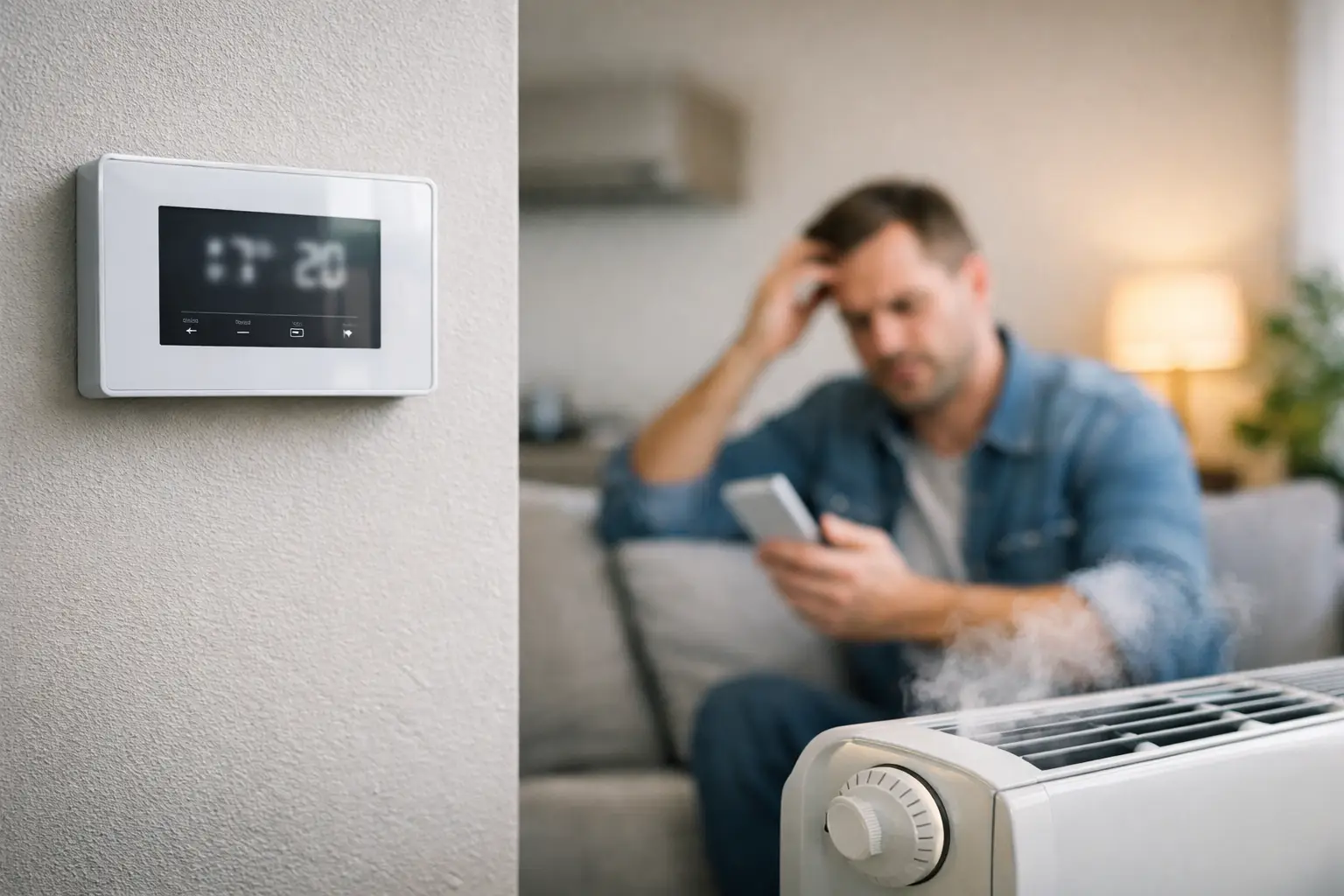
Your thermostat calls for cooling, the AC starts, and then it shuts off a few minutes later. Soon it starts again. That frustrating pattern is why homeowners ask, what causes thermostat short cycling? In most cases, the thermostat is not actually the part short cycling. The heating or cooling system is turning on and off too quickly because something is interfering with normal operation.
A normal HVAC cycle often runs long enough to bring the home closer to the set temperature, usually around 10 to 20 minutes depending on weather, insulation, equipment size, and indoor conditions. Short cycling means the system repeatedly starts and stops before completing that job. It can raise utility bills, leave rooms uncomfortable, add wear to expensive components, and sometimes point to a repair that should not wait.
What Causes Thermostat Short Cycling?
Short cycling has several possible causes, ranging from a simple thermostat setting problem to an airflow restriction or mechanical failure. Accurate diagnosis matters because the same symptom can come from very different issues. Replacing equipment before testing the system is not a solution. The goal is to find out why the unit is shutting down.
Thermostat location, settings, or wiring problems
A thermostat needs to sense the average temperature of the living space. If it is placed near a supply vent, exterior door, sunny window, kitchen, or heat-producing appliance, it may get a false reading. Cool air blowing directly on a thermostat during an AC cycle can convince it that the home has reached the set temperature, even when other rooms are still warm.
Incorrect settings can create similar behavior. Make sure the thermostat is set to Cool or Heat as needed, the fan is set to Auto rather than On, and the temperature setting is reasonable for the season. A very narrow temperature swing on some programmable or smart thermostats can also cause more frequent cycling.
Loose low-voltage wiring, a failing thermostat, or an incompatible thermostat can interrupt the call for heating or cooling. These are possible causes, but they should be tested rather than assumed. A thermostat replacement may be a sensible repair, but it will not fix an air conditioner that is shutting down on a safety control.
A dirty air filter or restricted airflow
A clogged filter is one of the most common and preventable causes of short cycling. Your system needs a consistent volume of air moving across its indoor coil or heat exchanger. When a filter is packed with dust, pet hair, or construction debris, airflow drops.
In cooling mode, low airflow can make the evaporator coil too cold and eventually freeze. The system may then cycle off or perform poorly while trying to protect itself. In heating mode, restricted airflow can cause the furnace to overheat and trip its high-limit safety switch. The blower may keep running while the burners shut off, then the furnace may try again after it cools down.
A filter should fit properly and be changed on the schedule recommended for your home and filter type. More restrictive filters are not automatically better. If a high-efficiency filter is too restrictive for the equipment or is not changed regularly, it can create airflow trouble instead of better air quality.
Closed or blocked supply vents and return grilles can also restrict airflow. Furniture, rugs, boxes, and closed interior doors can affect return-air paths, especially in smaller homes or rooms with only one return. Keep vents and returns clear, but do not assume opening every vent will solve a system problem. A technician may need to check duct design, blower speed, and static pressure.
A dirty outdoor unit or frozen indoor coil
Your outdoor condenser releases heat from the home. When its coil is coated with dirt, grass clippings, or cottonwood, it cannot shed heat efficiently. High operating pressure can make the air conditioner run hotter than it should and trip a safety control.
The indoor evaporator coil can become dirty as well, often after filters have been neglected. Dirt insulates the coil and restricts airflow. A frozen coil may be visible as ice on the refrigerant line near the indoor unit, but not always. If you see ice, turn the cooling system off and set the fan to On only if airflow is still working. Do not chip at the ice or continue running the AC. That can cause additional compressor damage.
Low refrigerant or a refrigerant leak
Refrigerant is not a fuel that an air conditioner normally uses up. If the refrigerant level is low, there is usually a leak that needs to be found and repaired. Low refrigerant can lower coil temperature, contribute to freezing, reduce cooling capacity, and cause the system to cycle abnormally.
Simply adding refrigerant without locating the leak may provide temporary relief, but it does not correct the underlying problem. The right repair depends on the leak location, the condition and age of the equipment, and the type of refrigerant used by the system. Sometimes repair is practical. In other cases, a technician should explain the costs and trade-offs clearly before recommending a larger decision.
An oversized HVAC system
A system that is too large for the building can cool or heat the thermostat area very quickly, then shut down before it properly conditions the rest of the space. Oversized air conditioners are especially problematic because they may not run long enough to remove adequate humidity. The house can feel cool but clammy, and temperatures may vary from room to room.
This problem often appears after a replacement installation, but equipment size is not based on square footage alone. Insulation, windows, ceiling height, ductwork, orientation, occupancy, and heat-producing equipment all affect load. Proper sizing requires more than choosing the biggest unit that fits the budget or the existing pad.
Drainage, electrical, and safety-control issues
Many modern air handlers and furnaces have a condensate float switch. When a drain line backs up, the switch can shut off cooling to prevent water damage. If the drain intermittently clears and backs up again, the system may appear to short cycle.
Electrical issues can also be involved. A weak capacitor, failing contactor, loose connection, blower motor problem, or control-board fault can cause intermittent starts and stops. These problems require professional testing because HVAC equipment contains high voltage and stored electrical energy. Repeatedly resetting breakers or bypassing safety switches is not a repair and can create a more serious hazard.
For gas furnaces, a dirty flame sensor, venting issue, pressure-switch fault, or overheating condition can cause the burners to light briefly and shut down. If you smell gas, see soot, notice a yellow or unstable burner flame, or have a carbon monoxide alarm, leave the area and follow appropriate emergency safety procedures before arranging service.
What You Can Check Before Calling for Service
Homeowners and property managers can rule out a few simple issues without opening equipment panels. Check that the thermostat is set correctly, replace a visibly dirty filter with the correct size, make sure supply and return vents are not blocked, and confirm the outdoor unit has clear space around it. Look for an overflowing drain pan, ice on refrigerant lines, or unusual sounds such as buzzing, clicking, or grinding.
Also pay attention to the pattern. Does the system shut off after two minutes every time? Does it happen only during the hottest part of the afternoon? Does the thermostat go blank, or does the indoor blower keep running after the outdoor unit stops? Those details help narrow the diagnosis and can save time during a service visit.
Do not keep forcing the system to run if it is freezing, tripping a breaker, producing a burning smell, or making loud mechanical noises. The cost of a service call is usually lower than the cost of a damaged compressor, failed blower motor, or water-damaged ceiling.
When Short Cycling Needs a Technician
If a clean filter and clear vents do not resolve the issue, the system needs diagnostic testing. A qualified HVAC technician can check temperature split, static pressure, refrigerant pressures, electrical components, safety switches, drainage, combustion performance, and thermostat operation. For commercial properties, they may also review zoning controls, economizers, rooftop-unit safeties, and occupancy schedules.
Short cycling does not automatically mean you need a new system. Sometimes the fix is a clogged drain, dirty coil, faulty capacitor, or thermostat issue. Sometimes it is a larger concern, such as major refrigerant leakage or improperly sized equipment. Either way, you deserve a clear explanation of what failed, what it will take to repair, and whether replacement is truly justified.
If your HVAC system is starting and stopping too often in the Charlotte area, DDL Services can identify the actual cause and explain practical repair options without turning every problem into a replacement sale. Acting early gives the system a better chance to recover before repeated cycling turns a manageable repair into a major one.