

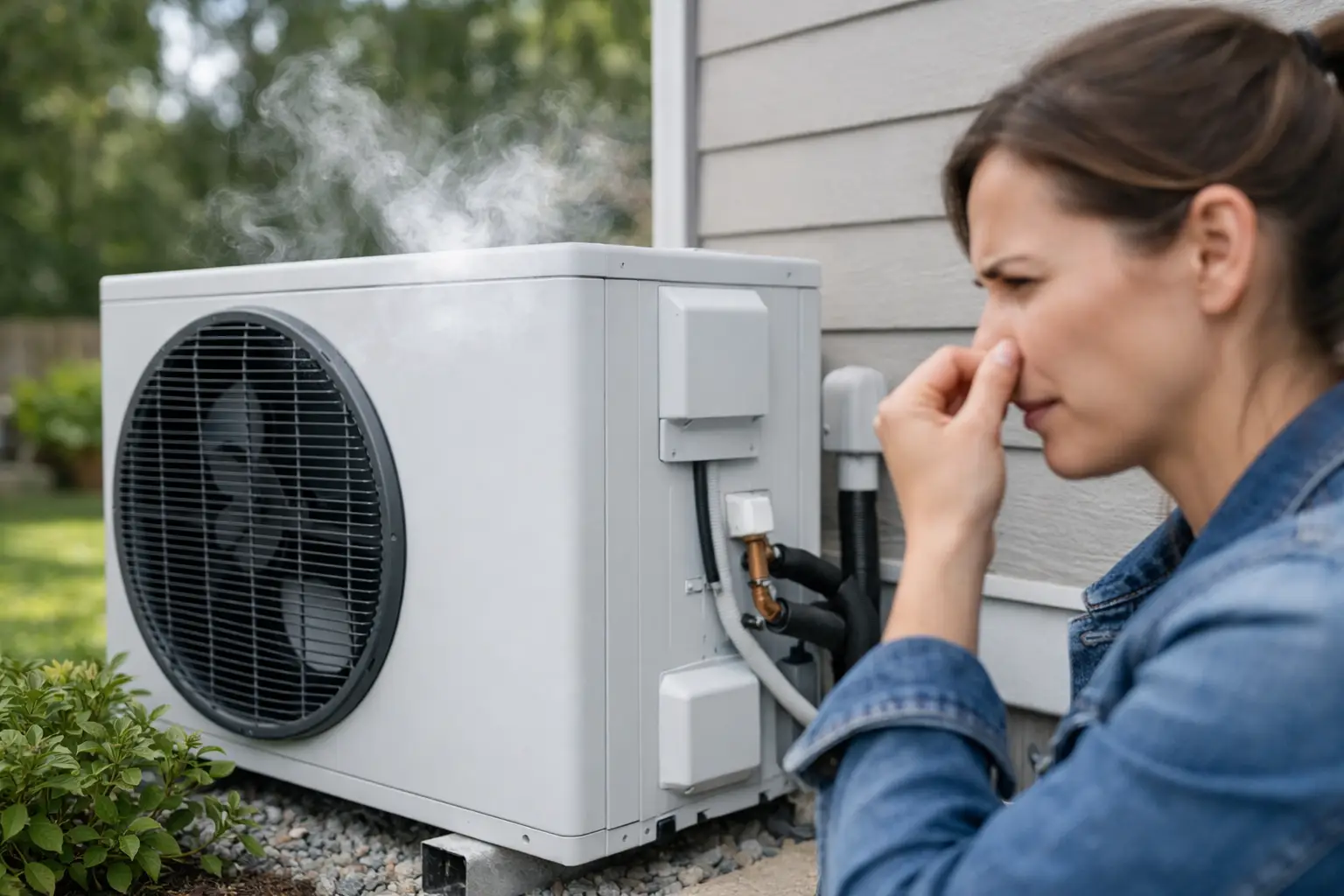
A heat pump should not make your home smell bad. A brief dusty odor after the heating system first starts may be normal, but persistent, sharp, musty, or burning smells need attention. If you are asking, “why does heat pump smell,” the answer depends heavily on what the odor resembles, when it appears, and whether the system is still heating or cooling properly.
The good news is that an odor does not automatically mean you need a new heat pump. In many cases, the cause is a dirty filter, moisture around the indoor coil, a drain issue, or an electrical component that needs repair. The right move is to identify the source instead of guessing or accepting a replacement recommendation before the system has been properly diagnosed.
Why Does a Heat Pump Smell Different in Heating Mode?
A heat pump moves heat rather than creating it through combustion. In cooling mode, it pulls heat from inside the home and sends it outdoors. In heating mode, it reverses that process. Because airflow, coil temperatures, and moisture conditions change, an odor that was barely noticeable during summer can become obvious when you switch to heat.
Charlotte-area weather also contributes. Long stretches of humidity can leave moisture on the indoor coil and in the condensate system. When the equipment changes modes or runs after sitting idle, that moisture can carry odors through the ductwork.
A dusty or burning smell at first startup
When you turn on heat for the first time in months, dust on electric heat strips, the indoor coil, or nearby components can produce a light burning smell. It should fade after a short period of normal operation, usually within an hour or two.
If the smell is strong, gets worse, returns every time the system runs, or resembles hot plastic or melting insulation, turn the system off and arrange service. A heat pump’s electric backup heat can create a real electrical hazard when wiring, relays, breakers, or heat strips are damaged. Do not keep running the unit just to see if the smell clears.
A musty, mildew, or “dirty sock” smell
This is one of the most common heat pump odor complaints. The smell often comes from microbial growth on the indoor evaporator coil, in the drain pan, or inside a damp section of ductwork. Dust and moisture create a surface where bacteria and organic buildup can develop. When air moves across the coil, the odor travels through the house.
A clogged filter can make the problem worse by reducing airflow and allowing more dirt to collect on the coil. A blocked condensate drain can also leave standing water in the pan. Replacing the filter may help if it is overdue, but it will not remove buildup already sitting on the coil or correct a drain problem.
A technician should inspect the coil, drain pan, trap, drain line, blower compartment, and accessible duct connections. The practical repair may be a thorough cleaning and drain service, not a major equipment replacement.
A sour or stale-water odor
Sour smells usually point to moisture that is not draining correctly. In cooling mode, your heat pump removes humidity from indoor air. That water should leave through the condensate line. If the line is partially blocked, improperly trapped, disconnected, or contaminated, odors can develop and enter the air stream.
This problem can be more noticeable in homes with a utility closet air handler, attic equipment, or a crawlspace installation. It may also be accompanied by water around the unit, a full secondary drain pan, or a safety switch that shuts the system down. Water where it does not belong deserves a prompt inspection because it can damage ceilings, flooring, insulation, and nearby electrical components.
Heat Pump Smells That Need Immediate Attention
Some odors should never be treated as a maintenance issue you can put off until next season. Shut the system down if it is safe to do so, and get qualified help.
A strong electrical or burning-plastic smell can indicate overheated wiring, a failing blower motor, a damaged capacitor, a relay problem, or an issue with electric heat strips. If you see smoke, hear crackling, or notice a breaker repeatedly tripping, turn off power at the thermostat and breaker if you can do so safely. Call for emergency HVAC service.
A rotten-egg or sulfur odor may not be caused by the heat pump itself. Most heat pumps are electric and do not use natural gas, but a dual-fuel system, gas furnace, gas water heater, stove, sewer issue, or even a dead animal near ductwork can create a similar smell. If you suspect a gas leak, leave the building, avoid switches and flames, and contact the gas utility or emergency services from a safe location.
A chemical smell deserves an inspection as well. Refrigerant is often described as having a faint chemical or sweet odor, but many modern refrigerants have little noticeable smell. Do not rely on odor alone to diagnose a refrigerant leak. Watch for weak heating or cooling, ice on refrigerant lines or coils, hissing sounds, or unusually high utility bills. A technician should locate and repair the leak before adding refrigerant.
What You Can Check Before Calling for Service
Start with the simple items that do not require opening electrical panels or taking equipment apart. Check whether the air filter is dirty, collapsed, or installed backward. A standard one-inch filter often needs replacement every one to three months, though the right schedule depends on filter type, pets, household activity, and system run time.
Next, look around the indoor unit for standing water, a wet floor, staining, or an overflowing drain pan. Check supply vents to see whether the odor is throughout the house or limited to one room. An odor only near one return grille or vent could point to a local duct, plumbing, or pest issue rather than the heat pump.
You can also note when the smell occurs. Does it begin only in heating mode, only after rain, only when auxiliary heat runs, or every time the blower starts? Those details help an HVAC technician narrow the diagnosis quickly and avoid unnecessary work.
Do not spray fragrance into return vents or pour harsh chemicals into the condensate line as a substitute for finding the problem. Covering an odor can delay a repair, and some chemicals can damage drain components or create fumes of their own.
When Maintenance Solves the Problem – and When Repair Is Needed
Routine maintenance is often enough to prevent odor issues before they reach the living space. A proper visit should include more than a quick filter check. The indoor coil, blower assembly, drain system, electrical connections, safety controls, and heating components all affect air quality and safe operation.
Still, maintenance is not the answer to every smell. A burnt-wire odor, recurring drain overflow, damaged insulation, failed motor, refrigerant leak, or contaminated duct section requires a specific repair. That distinction matters. An honest diagnosis identifies what is actually causing the smell and explains whether cleaning, repair, duct work, or a larger system decision is justified.
For commercial properties, odor complaints can become a bigger issue fast. Tenants, employees, and customers notice stale or burning air immediately, and shutting down a system may affect operations. Early diagnosis can limit downtime and keep a small issue from becoming water damage, equipment failure, or an indoor-air complaint.
Keep Odors From Returning
The best prevention is consistent filter changes, seasonal maintenance, and quick action when you see drainage or performance changes. Keep the area around the indoor unit clear so technicians can inspect it and so return air is not pulling in dust, chemicals, or stored items. Avoid storing paint, gasoline, cleaning solvents, or pest-control products near air handlers or return ducts, since their fumes can circulate through the building.
If your heat pump smell lasts beyond a brief first-use dust burnoff, trust what your senses are telling you. A clear diagnosis now can protect indoor air, prevent equipment damage, and often lead to a straightforward repair instead of an expensive guess.