

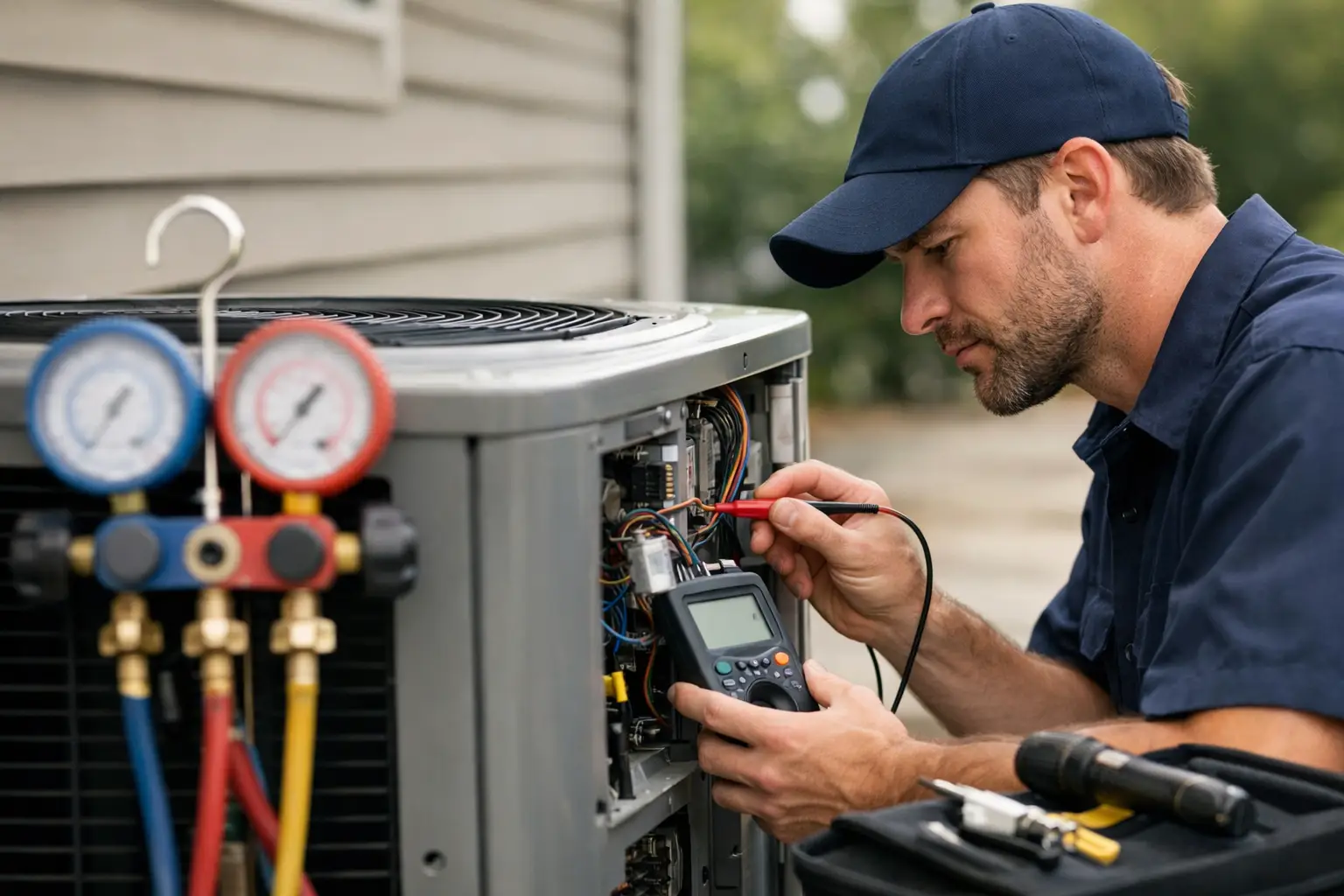
A homeowner calls on a 92-degree Charlotte afternoon: the thermostat is set to cool, the indoor blower is running, but the outdoor AC unit will not start. This HVAC repair example may sound simple, but it is exactly the kind of problem that can lead to an unnecessary replacement recommendation when nobody takes time to diagnose it correctly.
The system was not new, but it was not at the end of its useful life either. The homeowner had been told by another company that an aging air conditioner was probably the problem. Before discussing a new unit, a qualified technician should answer a more basic question: What has actually failed?
HVAC Repair Example: An AC Unit That Will Not Start
In this case, the thermostat was calling for cooling. The indoor equipment had power, the air filter was reasonably clean, and the breaker had not tripped. Outside, the condenser made a low humming sound for a few seconds but the fan and compressor did not begin running. Then the unit shut itself down.
That symptom can point to several possible issues. A failed capacitor is common, but it is not the only possibility. The trouble could also involve a damaged contactor, a wiring problem, low voltage at the disconnect, a seized fan motor, a compressor issue, or a safety control doing its job.
Guessing is not diagnosis. Replacing a part because it is common can waste time and money, especially if the part is not the real cause.
The technician first verified the electrical supply and confirmed the thermostat signal was reaching the outdoor unit. Next came a visual inspection of the contactor, wiring connections, and capacitor. The capacitor showed physical wear, but appearance alone was not enough to make the call. It was tested with a meter and measured well below its rated microfarad value.
That result mattered. The capacitor provides the electrical boost the compressor and condenser fan motor need to start and continue operating. When it weakens, the unit may struggle to start, hum without running, run intermittently, or trip a safety device. In this situation, the capacitor was no longer within an acceptable operating range.
The Repair Was a Part, Not a New System
The technician replaced the failed capacitor with one properly matched to the equipment’s specifications. That does not mean every capacitor with a similar shape or rating is acceptable. Using the wrong component can damage motors, create unreliable operation, or shorten the life of the replacement part.
After installation, the technician restarted the system and checked more than whether the fan spun. The equipment needed to be evaluated under operation. That included verifying compressor and fan startup, checking voltage and amp draw, confirming proper airflow, and measuring the temperature difference between return and supply air.
The AC started normally and began cooling again. No refrigerant was added because testing did not show a refrigerant problem. No major component was condemned because the readings did not support it. The homeowner paid for a targeted repair rather than being pushed toward replacing a system that still had useful service life.
That is not a promise that every no-start AC repair will be inexpensive. A failed compressor, burned wiring, or multiple aging components can change the decision. The point is that replacement should follow evidence, not a rushed first impression.
Why a Good Diagnosis Looks Beyond the Obvious
A capacitor can fail because of heat, age, electrical stress, or normal wear. But a capable technician also looks for conditions that may have contributed to the failure. If a condenser fan motor is drawing excessive amperage, for example, it can put extra strain on the capacitor. If the outdoor coil is packed with dirt, the system may run hotter and harder than it should.
In this HVAC repair example, the outdoor coil had a moderate buildup of debris. It was not the reason the system failed to start that day, but it could affect efficiency and wear over time. The homeowner was given a clear explanation of the repair and a practical recommendation to keep the outdoor unit clear of grass clippings, leaves, and stored items.
This is where honest HVAC service matters. A technician should separate an immediate repair from maintenance advice and from a genuine replacement conversation. Those are three different things. When they are treated as one sales pitch, homeowners and business owners lose the ability to make an informed decision.
What Testing Should Confirm
For a no-start air conditioner, a proper service visit commonly includes checking power at the equipment, thermostat demand, disconnect and breaker condition, contactor operation, capacitor performance, wiring connections, and motor or compressor electrical readings. Depending on the symptoms, the technician may also inspect airflow, coil condition, drain safety switches, and refrigerant-related performance.
Not every test is necessary on every call. The right sequence depends on what the system is doing. A unit that starts but blows warm air requires a different path than a unit that will not start at all. That is why an estimate made without meaningful testing should raise questions.
When Repair Makes Sense and When Replacement Does Not
A repair usually makes sense when the failed part is isolated, the equipment is otherwise operating properly, and the cost is reasonable compared with the system’s condition and expected remaining life. Capacitors, contactors, control boards, drain components, and some motors can often be repaired without turning the visit into a replacement sale.
Replacement deserves a serious discussion when repairs are frequent, major components have failed, energy use is consistently high, parts are becoming difficult to obtain, or the existing system is badly mismatched for the building. Equipment age matters, but age alone does not decide the answer. A well-maintained older unit with a minor electrical failure may still be worth repairing. A newer unit with repeated major issues may need a closer look.
For commercial property operators, the calculation also includes downtime. A restaurant dining room, office, retail space, or rental property cannot always wait for a long replacement process. A reliable repair may be the right immediate solution, even when a future equipment plan is worth considering. Clear documentation helps owners decide what to do now and what to budget for later.
What You Can Safely Check Before Calling
Homeowners can handle a few basic checks without opening electrical panels or removing equipment covers. Confirm that the thermostat is set to cool and below the indoor temperature. Check that the air filter is not severely clogged. Look at the breakers and make sure the outdoor disconnect has not been switched off. Make sure the outdoor unit is not blocked by debris.
If the system is humming, repeatedly clicking, giving off a burning smell, or tripping a breaker, turn it off and call for service. Do not keep resetting breakers or try to force the outdoor fan to turn. HVAC equipment combines high voltage, moving parts, and pressurized refrigerant. A small problem can become a larger one when the system is repeatedly forced to run.
The Value of a Straight Answer
The best repair visit ends with more than a working thermostat. You should know what failed, how the technician confirmed it, what was done to correct it, and whether any other issue needs attention soon. Plain language is not a luxury when you are making a decision about your home or business.
DDL Services approaches repairs with that standard in mind: find the real problem, explain the options, and fix what is broken when repair is the sensible choice. Whether an AC will not start, a furnace is short-cycling, or a commercial unit is affecting operations, the next step should be based on diagnostic facts.
If your heating or cooling system is acting differently than it normally does, take note of the symptoms, turn it off if operation seems unsafe, and ask for a diagnosis you can understand. A clear answer today can protect comfort, equipment, and your budget tomorrow.