

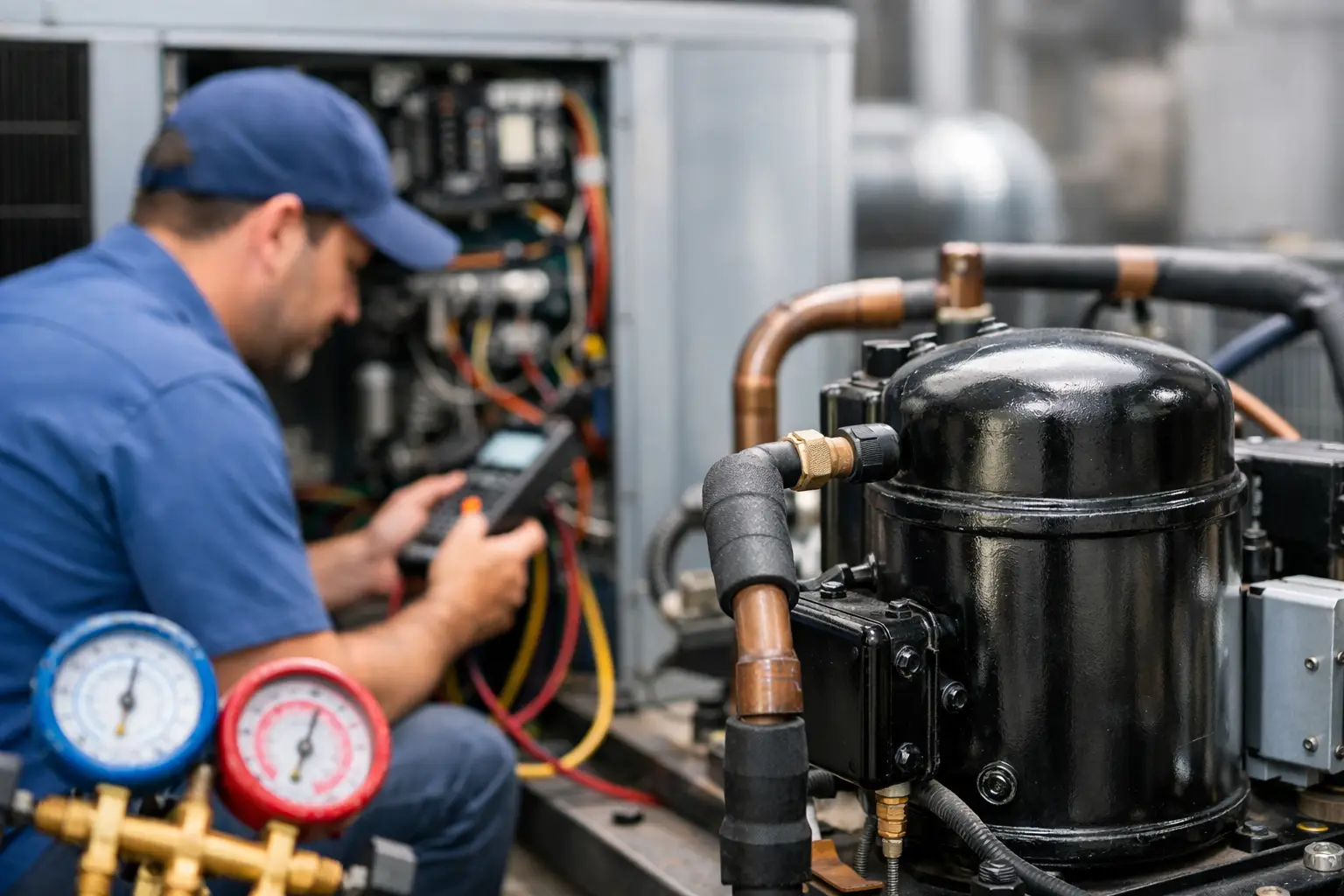
Your AC quits cooling on a 94-degree Charlotte afternoon, and the first thing you hear is, “You need a compressor.” That diagnosis can be correct, but it should never be a guess. In many service calls, diagnostic repair avoided compressor replacement because the real issue was a failed electrical component, restricted airflow, a refrigerant problem, or another repairable fault affecting the compressor.
A compressor is one of the most expensive parts in an air conditioning system. It is also central to the refrigeration process, so when it will not start or the system is not cooling, it is easy to blame the compressor first. Honest HVAC service requires more than identifying the symptom. It requires finding out why the symptom happened.
Why a Compressor Can Be Misdiagnosed
The compressor sits inside the outdoor condensing unit and pumps refrigerant through the system. If it does not run, runs poorly, overheats, or trips a breaker, cooling stops. But the same symptoms can come from parts and conditions outside the compressor itself.
A weak capacitor, for example, may not provide enough electrical boost to start the compressor. The outdoor fan may fail, causing the unit to overheat and shut down on a safety control. A faulty contactor can prevent proper voltage from reaching the compressor. Low refrigerant, a dirty evaporator coil, a clogged filter, or ductwork with poor airflow can also create operating conditions that make a working compressor look like it has failed.
That is why a technician should not treat a warm house and a silent outdoor unit as proof that replacement is necessary. The right question is: What is preventing the system from operating correctly?
Diagnostic Repair Can Avoid Compressor Replacement
A proper diagnosis starts with the entire system, not just the loudest or most obvious symptom. An experienced technician checks thermostat operation, electrical connections, voltage, amp draw, capacitors, contactors, safety switches, airflow, refrigerant pressures, and coil condition. These measurements show what the equipment is actually doing under operation.
For example, a compressor that hums but does not start may have a failed start capacitor or electrical connection. Replacing that part may restore normal cooling at a fraction of the cost of a compressor replacement. If a compressor is drawing unusually high amps, the technician needs to determine whether it is mechanically failing or working against a problem such as high head pressure from a dirty condenser coil or failed condenser fan.
The difference matters. Replacing a compressor without correcting the condition that caused it to struggle can put the new part at risk as well.
Electrical Problems That Mimic Compressor Failure
Electrical components wear out. Capacitors weaken over time, contactor contacts can pit or burn, wires can loosen, and breakers can trip. These failures are common, especially during a long stretch of summer heat when an AC system cycles heavily.
A failed capacitor is a classic example. The compressor may try to start, make a humming noise, and then shut down on overload protection. From the outside, it can sound serious. With testing, a technician can verify whether the capacitor is within its rated range and whether the compressor starts normally once the electrical fault is repaired.
Voltage issues also deserve attention. Low voltage, damaged wiring, or a failing disconnect can keep a compressor from receiving the power it needs. Those conditions are repair issues, but they are not automatically evidence of a bad compressor.
Airflow and Heat Problems Can Overwork the System
Your air conditioner moves heat out of your home. If it cannot release that heat outdoors, pressures rise and the compressor has to work harder. A condenser coil packed with dirt, grass clippings, cottonwood, or debris can restrict heat transfer. So can an outdoor fan that is spinning slowly or not running at all.
Indoor airflow is just as important. A severely clogged air filter, dirty evaporator coil, failing blower motor, or blocked return can cause the indoor coil to freeze. That can lead to poor cooling and unusual system pressures. The compressor may shut down to protect itself, but replacing it would not solve the underlying airflow problem.
Simple maintenance does not eliminate every breakdown, but it can catch restricted airflow, weak components, and dirty coils before they become expensive failures.
Refrigerant Issues Require More Than a Recharge
Low refrigerant can cause frozen coils, poor cooling, and added strain on the compressor. Refrigerant is not fuel that an AC system simply uses up. If the charge is low, there is usually a leak or a previous service issue that must be identified.
A responsible repair involves locating the cause when possible, repairing the leak when practical, checking system pressures and temperature split, and charging the system correctly. Adding refrigerant without addressing a leak can provide temporary relief, but it does not protect the equipment for long.
There are limits. A major coil leak on an older system or equipment using an outdated refrigerant may change the repair decision. The point is not that every system should be repaired forever. The point is that the recommendation should follow tested facts, not a quick sales pitch.
What a Real Compressor Diagnosis Looks Like
Before recommending compressor replacement, a technician should have evidence that the compressor itself has failed. That can include failed electrical winding tests, a grounded compressor, locked rotor readings after confirming proper voltage and start components, or performance data showing it cannot pump refrigerant effectively.
The technician should also identify why it failed. Compressors often fail because of overheating, electrical damage, contamination, improper refrigerant charge, poor airflow, or repeated hard starts. If the root cause is ignored, the repair may not last.
A clear explanation should cover what was tested, what readings were found, which repair options are available, and why replacement is or is not recommended. Homeowners and facility managers should not have to accept a major equipment decision based on vague language such as “it’s probably the compressor.”
When Compressor or System Replacement Makes Sense
Not every compressor can or should be saved. If testing confirms a failed compressor, replacement may be practical when the rest of the system is in good condition, the refrigerant type is supported, the unit is not near the end of its service life, and the repair cost is reasonable compared with replacement.
Full system replacement may be the better choice when the equipment is old, has repeated repair history, uses phased-out refrigerant, has major coil issues, or cannot deliver reliable comfort even after repair. A replacement recommendation should also consider proper sizing, ductwork condition, humidity control, and the building’s actual cooling needs. Installing an oversized or poorly matched system can create a new set of comfort and efficiency problems.
For commercial properties, the calculation may include downtime, tenant comfort, operating hours, and the availability of replacement parts. A repair that keeps a dependable unit running may make business sense. In other situations, planned replacement can prevent an emergency shutdown during peak demand.
What You Can Do Before Calling for Service
If your system is not cooling, check that the thermostat is set correctly, the air filter is not blocked, and the breaker has not tripped. Make sure the outdoor unit has clear space around it and is not buried in debris. Do not repeatedly reset a tripped breaker or force the system to run if it is making loud noises, smells burned, or will not start. Repeated attempts can create additional damage.
Then ask for a diagnosis, not just a quote for equipment. Ask what tests were performed, whether the compressor received proper voltage, whether the capacitor and contactor were checked, and whether airflow and refrigerant conditions were evaluated. Those are reasonable questions when the recommendation involves a major expense.
At DDL Services, the goal is straightforward: find the real problem and fix it when a sound repair is available. If replacement is the right call, you deserve a clear reason and a properly matched solution. Your comfort should be based on evidence, not pressure.