

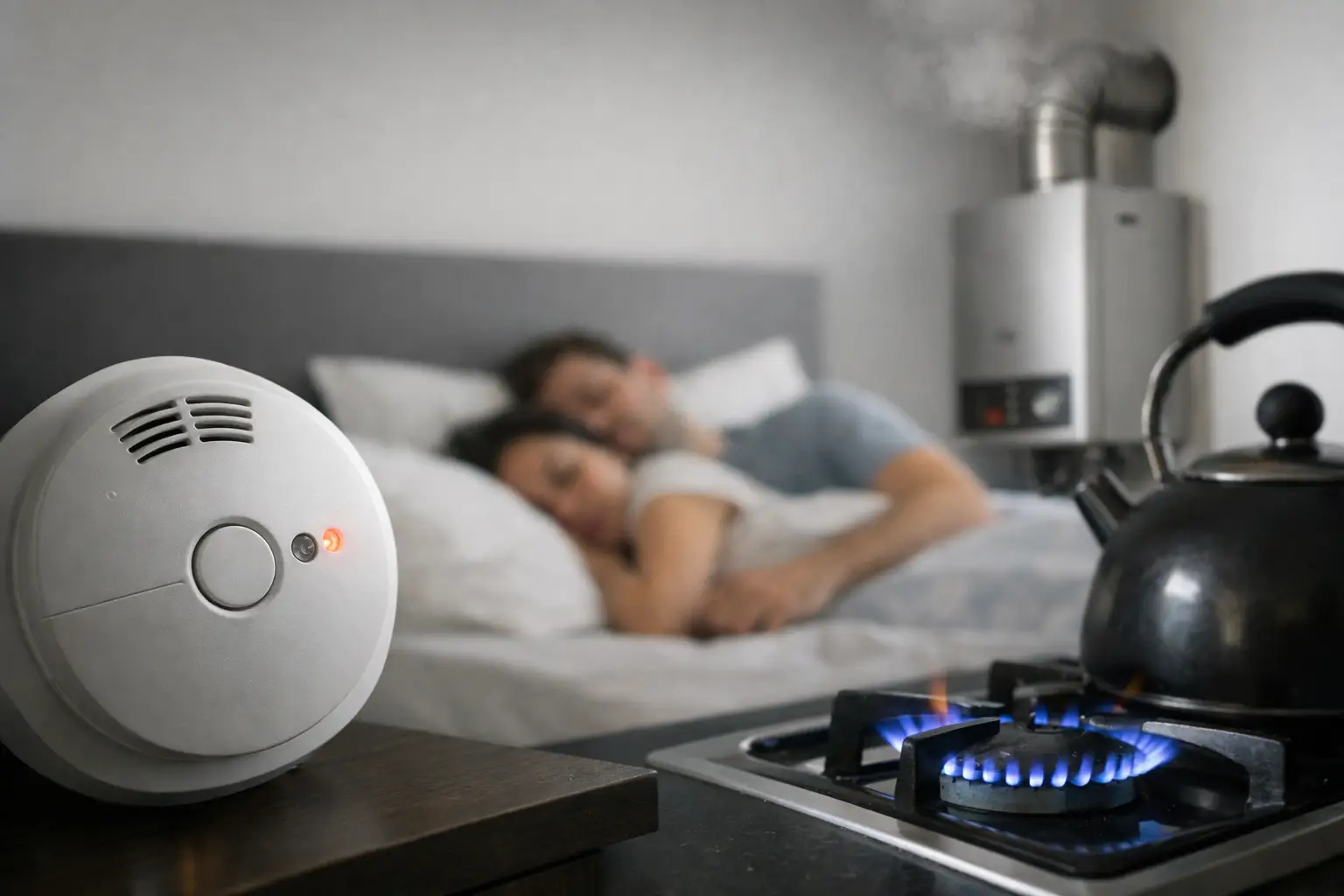
Carbon monoxide is a problem you cannot see or smell, which is why the top signs of carbon monoxide deserve immediate attention. A furnace, gas water heater, fireplace, or other fuel-burning appliance can produce this gas when combustion or venting goes wrong. The safest response is never to guess. If a carbon monoxide alarm sounds, get everyone outside into fresh air and call 911.
Why Carbon Monoxide Is So Dangerous
Carbon monoxide, often called CO, prevents the blood from carrying oxygen properly. Exposure can make people sick quickly, especially children, older adults, pregnant people, and anyone with heart or respiratory conditions. High concentrations can cause collapse or death before a person realizes what is happening.
The challenge is that early symptoms can feel like a cold, flu, migraine, food poisoning, or simple fatigue. That is why physical symptoms are not a dependable warning system. A working, properly placed CO alarm is the first line of defense in a home or commercial property.
Top Signs of Carbon Monoxide Exposure
A CO alarm is the clearest warning. Treat it as an emergency even if no one feels ill and even if the alarm stops after a few minutes. Do not assume it is a bad battery, a nuisance alarm, or a device malfunction without having the situation checked.
People exposed to carbon monoxide may experience headache, dizziness, nausea, weakness, confusion, chest discomfort, or shortness of breath. Symptoms may improve after going outdoors and return after coming back inside. When more than one person has similar unexplained symptoms in the same building, that is particularly concerning.
Other warning signs can point to a combustion or venting problem, though they do not prove carbon monoxide is present. Watch for soot or dark stains around a furnace, water heater, fireplace, or vent pipe; excessive moisture on windows near an appliance; yellow or flickering burner flames where blue flames are expected; and unusual odors from exhaust or fuel-burning equipment. Natural gas itself has a sulfur-like odor added for detection, but carbon monoxide has no odor at all.
A furnace that runs but does not heat correctly, repeatedly shuts down, or has visible corrosion around its venting should also be inspected. These issues may have other causes, but they are not items to ignore during heating season.
What to Do When a CO Alarm Sounds
Do not try to locate the source while you are inside. Do not open windows and decide the danger has passed. Fresh air may reduce the concentration temporarily, but it does not fix the source or make reentry safe.
Get every person and pet out of the building immediately. Move to fresh air away from doors, windows, and attached garages. Call 911 from outside, particularly if anyone feels sick, has fainted, or has chest pain, confusion, or breathing trouble. Follow instructions from emergency responders and do not reenter until they say it is safe.
If a person has symptoms, medical evaluation matters even if they begin feeling better outdoors. Carbon monoxide poisoning can require treatment that cannot be handled at home.
Once emergency personnel have cleared the property, arrange a qualified inspection of the likely equipment. A technician should check the appliance, heat exchanger where applicable, venting, gas connections, combustion air, and overall operation. The goal is to find the actual cause, not to jump straight to replacing equipment that may be repairable.
Common Sources in Homes and Businesses
Any device that burns fuel can create carbon monoxide if it is damaged, improperly installed, poorly vented, or operated in an enclosed area. In the Charlotte area, heating systems are a major concern during colder weather, but CO risks are not limited to furnaces.
Common sources include gas furnaces, boilers, water heaters, fireplaces, gas ranges, dryers, space heaters, and generators. Vehicles left running in attached garages can also allow CO to enter living or working areas. In commercial settings, warehouses, restaurants, mechanical rooms, and loading areas can have additional exposure risks from heaters, cooking equipment, or fuel-powered tools.
Portable generators deserve special attention after storms or outages. They must stay outdoors, well away from doors, windows, and vents. Never run one in a garage, crawl space, basement, covered porch, or near an open bay door. Moving it “just inside” to protect it from rain can create a life-threatening situation.
Carbon Monoxide Alarms: Placement and Maintenance
Install CO alarms on every level of a home, outside each sleeping area, and according to the manufacturer’s instructions. Larger homes may need additional devices. In a commercial building, alarm placement should account for occupancy, the building layout, equipment rooms, and applicable safety requirements.
Test alarms monthly and replace batteries as directed by the manufacturer. Many modern alarms have sealed batteries, but the entire unit still has a limited service life. Check the date on the back of the device and replace it when it reaches its expiration date, commonly five to 10 years depending on the model.
Smoke alarms and carbon monoxide alarms serve different purposes. A combined unit can be useful, but it must be rated for both hazards and installed correctly. Never remove batteries or disable an alarm because it is inconvenient or has sounded before. Repeated alarms mean the cause needs to be identified.
Preventing CO Problems From HVAC Equipment
Preventive maintenance is not just about keeping a furnace efficient. It gives a qualified technician an opportunity to inspect components that affect safe combustion and venting. For gas heating equipment, that can include checking burners, ignition, the heat exchanger, flue piping, vent termination, gas pressure, drainage, safety controls, and signs of rust or deterioration.
The right repair depends on the finding. A loose vent connection may be corrected without replacing a furnace. A failed inducer motor, blocked condensate drain, or burner issue may also have a targeted repair. On the other hand, a cracked heat exchanger or severely compromised venting system can require major work or replacement. The decision should be based on documented condition, safety, age, repair cost, and the availability of appropriate parts, not on a sales script.
Homeowners can help by keeping the area around furnaces and water heaters clear, avoiding storage against vent pipes, and making sure exterior intake and exhaust terminations are not blocked by leaves, nests, mulch, snow, or debris. Do not cover vents to stop drafts or attempt to modify appliance venting yourself.
When to Call for Help
Call emergency services first if a CO alarm is sounding or anyone has symptoms. For non-emergency concerns, such as soot near equipment, unusual furnace operation, a yellow burner flame, or a venting issue found during a visual check, schedule a prompt inspection with a licensed HVAC professional.
For property managers and business owners, take complaints about headaches, dizziness, or repeated alarm activity seriously. Moving employees to another room is not an adequate response when a possible CO source exists. Remove occupants from the affected area, follow emergency guidance, and have the equipment evaluated before normal operations resume.
Carbon monoxide safety comes down to a simple standard: trust the alarm, leave when it sounds, and have a qualified professional identify the source before anyone goes back inside. A careful inspection can separate a repairable issue from a serious equipment failure, and that clarity is worth far more than a quick guess.