

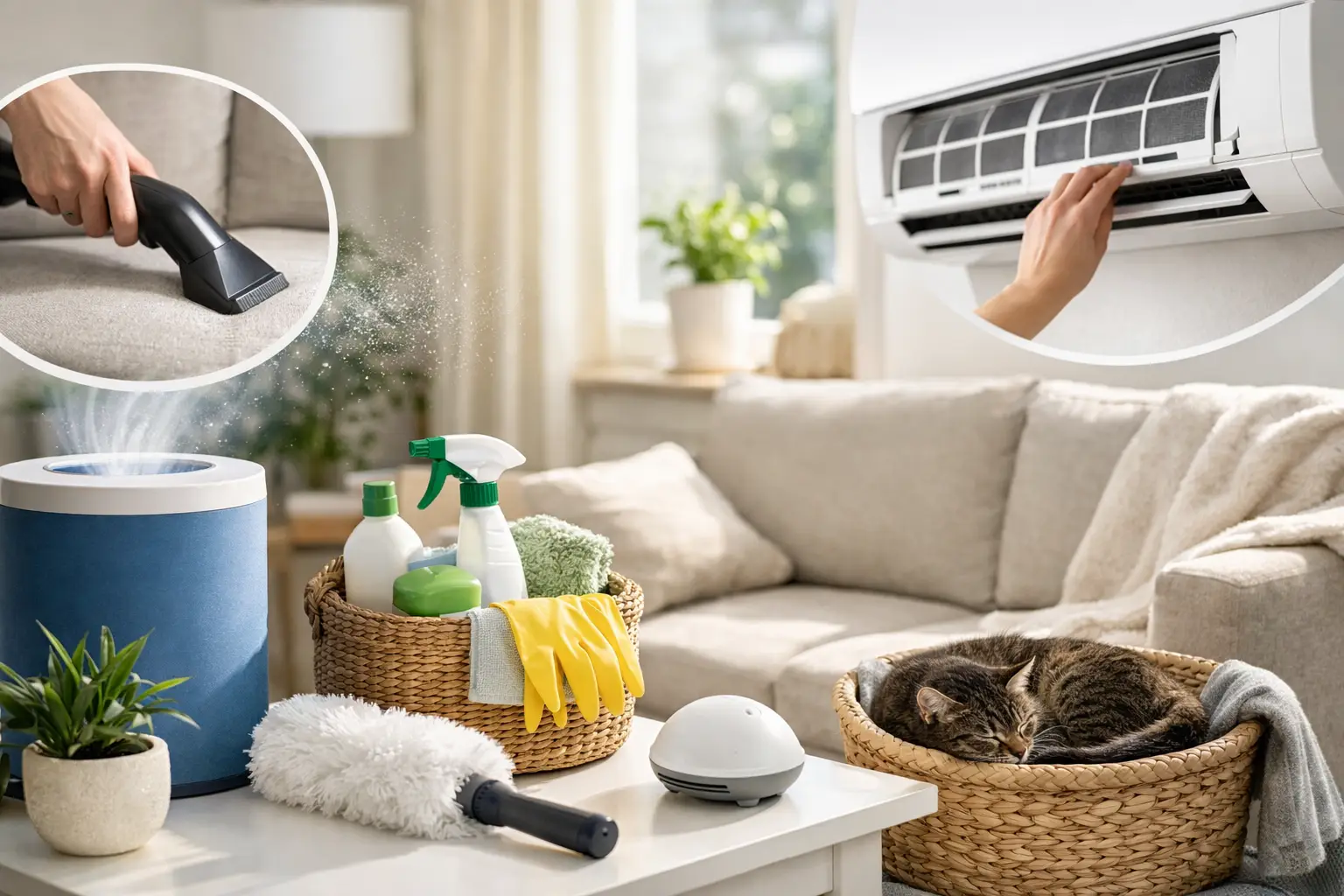
A Charlotte summer can turn a small indoor-air issue into a daily annoyance. Humid outdoor air, a busy HVAC system, pets, pollen, and dust all find their way into the same living space. The best ways to reduce indoor allergens are not usually expensive or complicated, but they do require attention to the real sources of the problem instead of relying on air fresheners or one quick cleaning day.
For most homes and small businesses, the goal is straightforward: keep allergens from building up, remove what has settled indoors, and make sure the HVAC system is filtering and moving air the way it should. No single product solves every allergy concern. Consistent habits and a properly maintained system make the biggest difference.
Start by Finding What Is Feeding the Problem
Indoor allergy symptoms can come from dust mites, pet dander, mold spores, pollen, cockroach debris, or particles brought in on shoes and clothing. In the Charlotte area, pollen and humidity are often major contributors. If symptoms are noticeably worse in one room, do not assume the entire HVAC system is at fault. Look closely at that room first.
Check for visible dust around supply vents, damp spots near windows, musty odors, worn carpeting, clutter that collects dust, and signs of pet hair in upholstery. A bathroom that stays damp or a laundry area with poor ventilation may be adding moisture to the home. A bedroom with heavy curtains, old pillows, and an uncovered mattress can hold a surprising amount of allergen material.
This matters because the fix depends on the source. More filtration will not solve a plumbing leak creating mold. A new HVAC system will not fix a bedroom where bedding is rarely washed. Good indoor air quality starts with an honest diagnosis, not a sales pitch.
Best Ways to Reduce Indoor Allergens Through Cleaning
Regular cleaning is one of the most reliable ways to lower the allergen load in a home. The key is to remove particles instead of stirring them into the air. Dry dusting with a feather duster often moves dust from one surface to another. Use a damp microfiber cloth on hard surfaces, then wash or replace the cloth after use.
Vacuum carpets, area rugs, upholstered furniture, and pet-frequented areas at least once a week. A vacuum with a sealed system and HEPA-rated filtration is preferable because it is less likely to blow fine particles back into the room. If someone in the home has strong allergies, vacuuming when they are out of the room can help avoid short-term irritation.
Bedding deserves special attention. Wash sheets and pillowcases weekly in hot water when fabric instructions allow. Mattress and pillow covers designed to block allergens can help, particularly for people sensitive to dust mites. Replace worn pillows when they no longer wash well or hold an odor.
Hard flooring is generally easier to keep low-allergen than wall-to-wall carpet, but replacement is not always necessary. If carpet is in good condition, frequent vacuuming and periodic professional cleaning may be enough. The practical choice depends on your budget, the amount of foot traffic, and whether pets or allergy sufferers use the space.
Control Humidity Before Mold and Dust Mites Multiply
Humidity is one of the most overlooked parts of indoor allergy control. Dust mites and mold thrive in damp conditions. In many North Carolina homes, indoor humidity rises during long cooling seasons, especially when an air conditioner is oversized, short-cycling, or not running properly.
A good target for most homes is relative humidity between 30% and 50%. A simple hygrometer can tell you where you stand. If humidity regularly climbs above 50%, start with the basics: run bathroom exhaust fans during and after showers, use the kitchen exhaust fan when cooking, repair leaks quickly, and make sure dryer vents are properly routed outdoors.
Your air conditioner also plays a major role in moisture removal. An AC unit that cools the house but leaves it clammy may have an airflow, refrigerant, sizing, thermostat, or drainage issue. Do not jump straight to replacement. A technician should inspect the system and identify why it is not dehumidifying as expected. In some homes, a standalone or whole-home dehumidifier makes sense, but only after the underlying HVAC performance is checked.
Do not overcorrect by making the home excessively dry. Very low humidity can irritate nasal passages, dry out wood finishes, and create other comfort problems. The goal is steady control, not extreme settings.
Use the Right HVAC Filter and Change It on Time
Your HVAC filter is not just there to protect equipment. It also captures particles before they circulate through the home. However, the highest-rated filter is not automatically the right choice for every system.
For many residential systems, a quality pleated filter in the MERV 8 to MERV 11 range provides a practical balance between particle capture and airflow. Higher-MERV filters can capture smaller particles, but they may create too much resistance if the system was not designed for them. Restricted airflow can contribute to comfort problems, frozen coils, higher operating costs, and unnecessary wear on equipment.
Check the filter monthly, especially during peak heating and cooling months. Replace it when it is visibly loaded or according to the manufacturer’s recommendation. Homes with multiple pets, construction nearby, frequent open windows, or heavy pollen exposure may need more frequent changes.
Filter fit is just as important as filter rating. A filter that is bent, undersized, or loosely installed allows air to bypass it. That means dust and debris can enter the return ductwork and equipment. If you repeatedly find dirty filters after only a short period, or if there is dust around vents soon after cleaning, it is worth having the return side of the system evaluated.
Keep Pollen and Pet Dander From Spreading
Pollen does not stay outside simply because the windows are closed. It comes in on shoes, clothing, pets, and through open doors. During high-pollen periods, leave shoes near the entry, wipe down pets after time outdoors, and change clothes after yard work before sitting on furniture or beds.
Pets do not have to be removed from the home to improve air quality. Consistent grooming, washing pet bedding, and keeping pets out of bedrooms can significantly reduce dander in the areas where people spend the most time. Upholstered furniture and rugs in pet areas need more frequent vacuuming than the rest of the home.
If outdoor air quality is poor or pollen counts are high, keep windows closed and use the HVAC system with a clean filter. Opening windows can be useful on mild days, but it is a trade-off. Fresh outdoor air may feel good, while also introducing pollen and humidity that the system then has to manage.
Do Not Ignore HVAC Maintenance and Drainage Issues
A well-maintained HVAC system supports cleaner indoor air, but it is not an air purifier by itself. Its job is to circulate conditioned air, manage moisture, and filter what passes through the return system. When maintenance is skipped, dirty components and drainage problems can work against those goals.
During a professional maintenance visit, the technician should inspect the filter setup, blower operation, evaporator coil condition, condensate drain, electrical components, refrigerant performance, and overall airflow. A clogged condensate drain can lead to water damage and microbial growth. A dirty blower or coil can reduce airflow and make the system work harder.
Be cautious with anyone who claims duct cleaning is automatically required for every allergy problem. Duct cleaning can be appropriate after major renovation work, visible contamination, pest activity, or unusual debris buildup. It is not a substitute for fixing leaks, controlling humidity, changing filters, or cleaning the spaces where allergens actually settle.
For Businesses, Focus on High-Traffic Areas
Small offices, retail spaces, and other commercial properties face the same issues, often at a larger scale. Entryways, waiting areas, break rooms, and carpeted offices collect outside particles quickly. Regular floor care, maintained restroom exhaust, clean filters, and prompt attention to water leaks protect both employee comfort and customer experience.
Facility managers should also pay attention to uneven temperatures and persistent odors. Those are not always simple comfort complaints. They can point to ventilation, drainage, or airflow problems that deserve a real inspection.
Know When It Is Time to Call a Professional
Call for HVAC service if you notice musty odors from vents, visible water near the indoor unit, ice on refrigerant lines, weak airflow, unusually high humidity, or repeated filter loading. Those symptoms may have a simple repair behind them, and finding it early can prevent a larger problem.
For allergy symptoms that remain severe despite practical home changes, speak with a qualified medical professional. Indoor-air improvements can reduce exposure, but they do not replace medical advice or treatment.
Cleaner indoor air is built through small, repeatable decisions: a clean filter, dry bathrooms, washed bedding, controlled humidity, and an HVAC system that is doing its actual job. If something in that chain is not working, DDL Services focuses on finding the real problem and fixing it before recommending more than you need.