

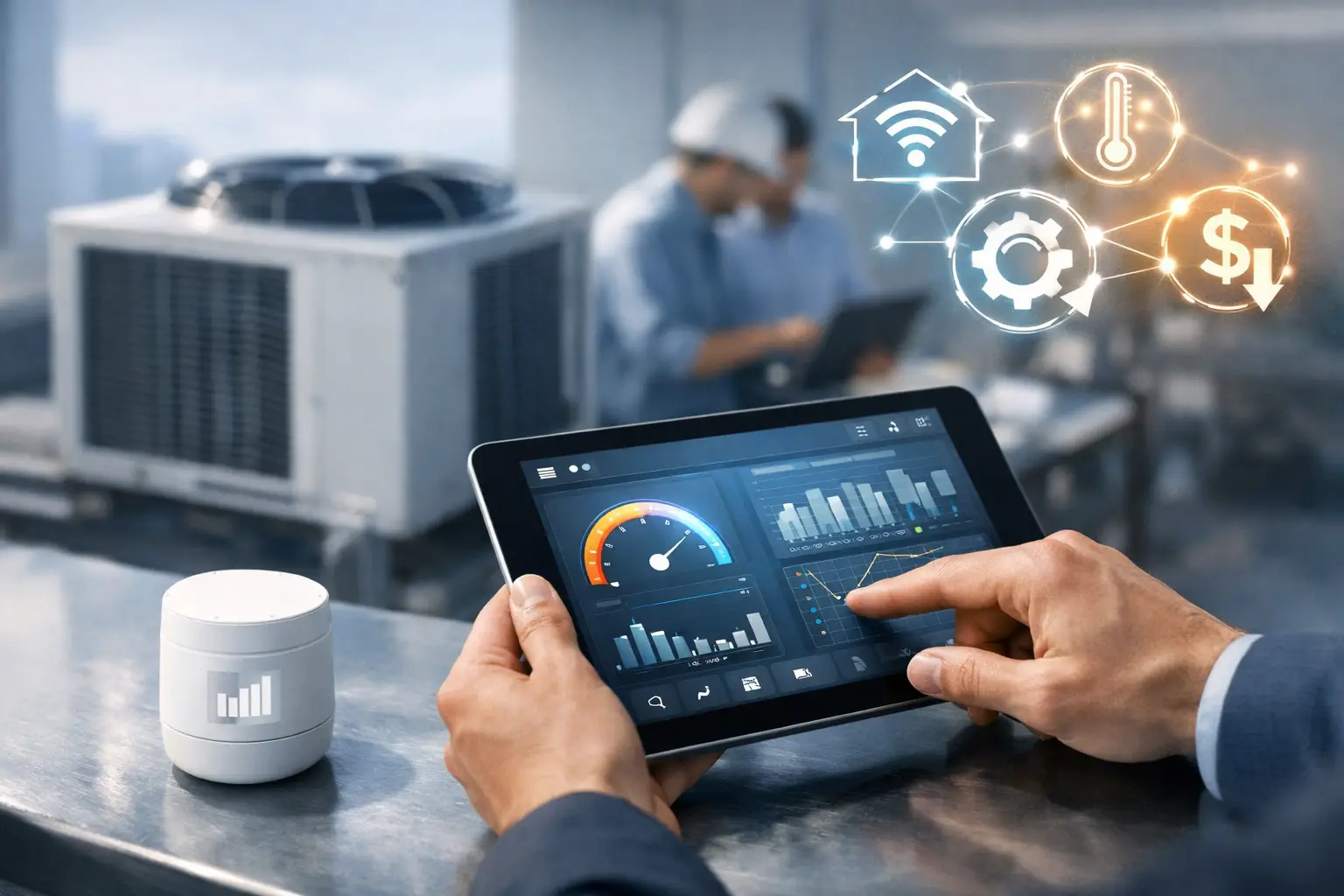
A thermostat that says the house is 72 degrees cannot tell you whether the system ran twice as long as it should have to get there. That gap is where smart HVAC monitoring trends are changing maintenance decisions for homeowners, business owners, and facility managers. The useful part is not having another app on your phone. It is seeing an operating problem early enough to fix it before it becomes a no-cooling call, a comfort complaint, or an expensive repair.
For properties in the Charlotte area, that matters. Long cooling seasons, high humidity, heat pumps working through temperature swings, and busy commercial spaces can all put steady pressure on HVAC equipment. Monitoring can provide better information, but it does not replace a technician who knows how to interpret that information and find the actual cause.
Smart HVAC Monitoring Trends That Matter
The biggest shift is from reacting to a failure to watching for changes in how a system performs. A modern thermostat, connected sensor, or commercial controls platform can track runtime, indoor temperature, humidity, filter reminders, and alerts. More advanced setups may also watch supply and return air temperatures, equipment cycles, electrical use, refrigerant-related performance indicators, and fault codes.
The value is in the trend, not one unusual reading. An air conditioner running longer during a 98-degree afternoon is normal. That same unit taking longer and longer to cool on mild days is worth investigating. It could point to restricted airflow, a dirty outdoor coil, a weak capacitor, duct leakage, a refrigerant issue, or a thermostat setup problem. Monitoring identifies the change. Proper diagnostics determine the repair.
This distinction protects customers from two bad outcomes: ignoring a growing problem and replacing equipment based on incomplete information. Data should lead to a closer look, not an automatic sales pitch.
Runtime and cycling are becoming useful warning signs
Runtime tracking is one of the most practical monitoring tools available. When a system suddenly runs far more than usual to hold the same temperature, it is using more energy and often working against a problem. That problem may be simple, such as a clogged filter or blocked return grille. It may also be mechanical.
Short cycling is another pattern worth watching. This is when equipment starts and stops repeatedly without completing a normal heating or cooling cycle. It can be caused by incorrect thermostat placement, an oversized system, airflow restrictions, control issues, or equipment faults. Constant cycling adds wear and can leave parts of the home or building uncomfortable.
A monitoring alert is not a diagnosis. Still, it gives the owner a useful record: when the issue began, what temperatures were present, and how frequently the system cycled. That helps a qualified technician avoid guesswork.
Humidity monitoring is moving beyond comfort
In North Carolina, indoor humidity affects more than how warm a room feels. High humidity can make a properly cooled home feel sticky, encourage moisture concerns, and raise the temptation to set the thermostat lower than necessary. In commercial buildings, it can affect customers, employees, stored materials, and sensitive equipment.
Smart sensors can show when humidity remains high even though the thermostat reaches its cooling setpoint. That does not automatically mean the unit needs to be replaced. The cause could be oversized equipment that cools too quickly, poor airflow, an improperly configured fan setting, duct issues, outdoor air entering the building, or a system that needs service.
The useful trend is seeing whether humidity problems happen all the time, only during rainy weather, or only in specific rooms. That helps separate an HVAC problem from insulation, drainage, ventilation, or building-envelope concerns.
Room-by-room sensors expose uneven comfort
A single thermostat is usually located in one central area. It cannot accurately represent a sunny upstairs bedroom, a back office with computers, a retail space near an exterior door, or a conference room that fills up in the afternoon. Wireless room sensors are becoming more common because they show where comfort is actually breaking down.
For homeowners, these sensors can reveal whether a hot room is a zoning issue, a duct delivery problem, or simply a closed vent and poor return-air path. For commercial operators, they can provide evidence that a complaint is isolated rather than building-wide.
There is a trade-off. More sensors create more data, and data needs a plan. Installing sensors without deciding who will review alerts or what conditions trigger service can create noise instead of useful insight. Start with problem areas, not every room in the building.
Where Smart HVAC Monitoring Has Limits
Connected HVAC tools are helpful, but they can create false confidence when used without context. A thermostat may report that the system is cooling while an evaporator coil is beginning to freeze. An app may send a filter alert based on elapsed time even if the filter is still reasonably clean. A high energy-use alert may reflect a heat wave, a change in occupancy, or a door that is being opened constantly.
Smart equipment also depends on reliable Wi-Fi, correct installation, updated settings, and reasonable privacy practices. For a commercial property, someone should control account access when staff members change. For a rental property, owners should be clear about what data is monitored and avoid using indoor sensors in a way that crosses privacy boundaries.
Most importantly, monitoring cannot safely handle repairs. Electrical components, refrigerant systems, gas heating equipment, and drainage issues require hands-on inspection. If an alert shows repeated faults, water around an indoor unit, burning smells, breaker trips, ice on refrigerant lines, or no heating or cooling, turn to professional service rather than trying to reset the problem repeatedly.
How to Use Monitoring Without Overcomplicating It
The best setup depends on the property and the reason for monitoring. A homeowner with a reliable single-system house may benefit most from a quality smart thermostat and one sensor in a consistently uncomfortable room. That can help with schedules, alerts, and a clearer picture of runtime.
A larger home with multiple systems, a rental portfolio, or a small commercial building may benefit from equipment-specific monitoring and remote alerts. In those cases, it is often worth tracking a few conditions that have a direct operational impact: loss of cooling, high indoor temperature, humidity spikes, unusual runtime, drain pan alerts, and repeated equipment faults.
Before buying new technology, solve basic maintenance issues. Replace filters on an appropriate schedule, keep outdoor units clear, make sure condensate drains are maintained, and schedule seasonal service. Monitoring works better when it is watching a system that has been properly inspected and maintained.
It also helps to establish a baseline. For several weeks, note normal temperatures, humidity, runtime, and energy use. Then, when conditions change, you have something meaningful to compare. One high bill is a question. Three months of increasing runtime under similar weather conditions is a service clue.
A Better Way to Respond to an Alert
When a smart HVAC alert arrives, avoid assuming the worst. Check the thermostat setting, filter condition, return and supply vents, outdoor-unit clearance, and whether a door or window has been left open. If the system is running but not keeping up, record what you see rather than constantly changing settings.
A technician can use that information alongside a full inspection of airflow, electrical components, coils, refrigerant performance, controls, and duct conditions. That is the difference between replacing a part because an app raised a flag and correcting the condition that caused the alert.
For commercial operators, create a simple response process. Decide who receives alerts, who verifies the problem on site, and when to call for service. A clear process prevents a weekend temperature issue from becoming Monday morning downtime.
Smart monitoring should make HVAC ownership less stressful, not more technical. Used well, it gives you earlier warning, better questions, and a clearer record of how your equipment is behaving. The right next step is still the same: find the real problem, fix what is broken, and make replacement decisions only when the facts support them.