

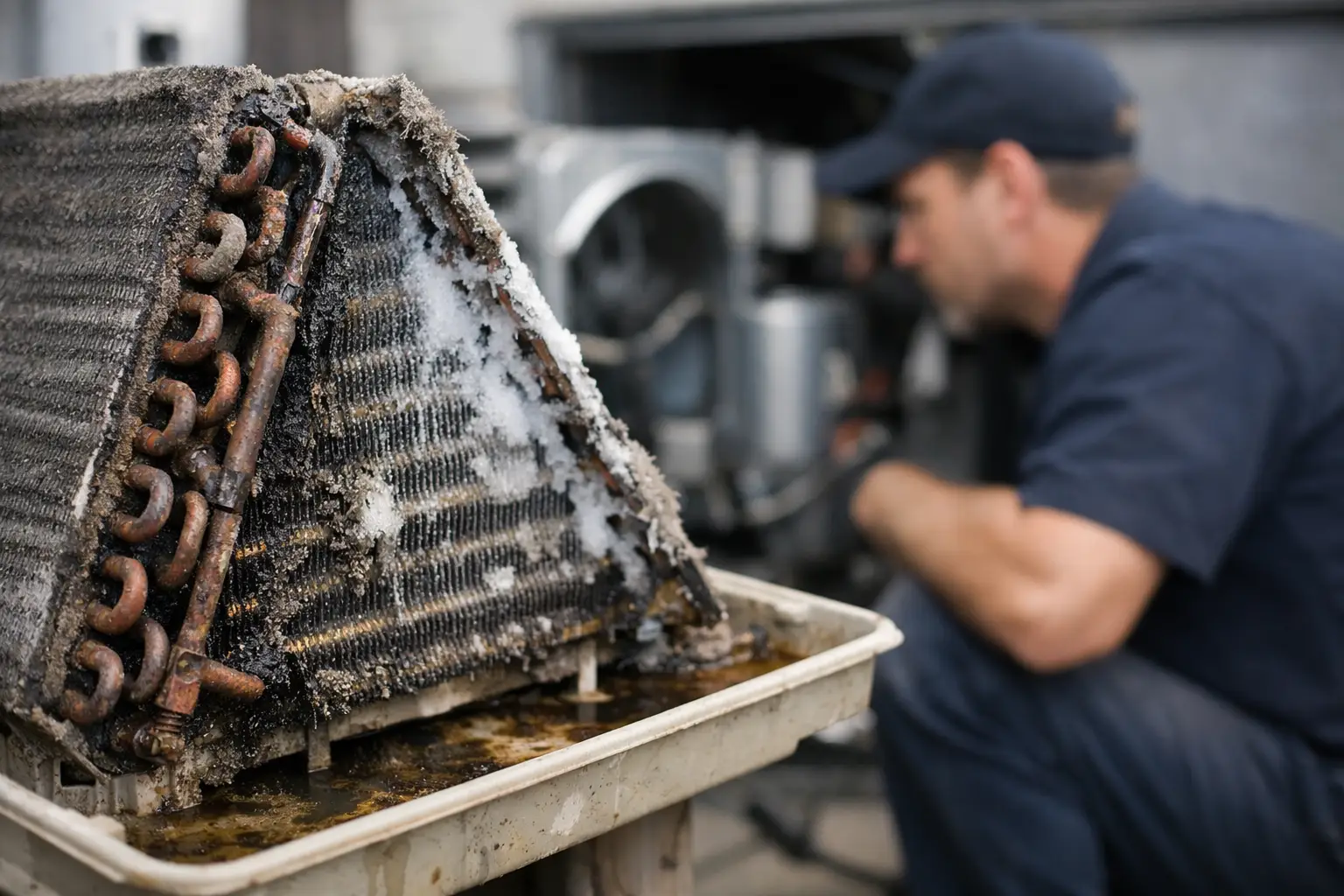
Your air conditioner may still run even when the evaporator coil is failing. That is what makes this problem expensive. Homeowners often notice weak cooling, high electric bills, or water near the indoor unit and assume the entire system is worn out. Knowing the best signs bad evaporator coil problems can produce helps you act before a small refrigerant leak, airflow issue, or drainage problem turns into a major repair.
The evaporator coil sits inside the indoor portion of your AC system, usually above or beside the furnace or air handler. It absorbs heat from indoor air as refrigerant moves through it. When the coil is dirty, frozen, leaking, corroded, or damaged, your system cannot remove heat effectively. The result is poor comfort, unnecessary wear on the equipment, and higher operating costs.
The Best Signs of a Bad Evaporator Coil
1. Your AC runs, but the house does not cool well
A system with a bad evaporator coil may blow air from the vents, but that air may not feel cold enough to lower the indoor temperature. You might notice the thermostat is set to 72 degrees, while the house stays several degrees warmer during the afternoon.
This symptom does not automatically mean the coil has failed. A dirty filter, blocked return vent, failing blower motor, duct leak, or outdoor unit problem can also reduce cooling. The key is proper diagnosis rather than guessing based on one symptom.
2. Ice forms on the indoor coil or refrigerant lines
Visible ice is one of the clearest warning signs. You may see frost or ice on the copper refrigerant line near the indoor unit, or a technician may find the evaporator coil frozen inside the cabinet.
A frozen coil usually means one of two things: not enough warm air is moving across the coil, or refrigerant pressure is too low. Restricted airflow can come from a clogged filter, dirty coil, blocked vents, or blower issue. Low refrigerant often points to a leak. Simply adding refrigerant without finding the leak may get the system cooling temporarily, but it does not fix the actual problem.
If you see ice, turn the cooling system off and set the fan to ON if it will run. This can help the coil thaw. Do not chip at the ice or keep forcing the system to operate. Running a frozen air conditioner can damage the compressor.
3. Water is leaking around the air handler or furnace
Your evaporator coil creates condensation during normal cooling. That moisture should drain safely through the condensate line. When a coil freezes and then thaws, it can release more water than the drain system can handle. A clogged drain line, damaged drain pan, or poor drainage can also cause a leak.
Water near the indoor unit deserves quick attention, especially in an attic, closet, or ceiling-mounted air handler. It can damage drywall, flooring, insulation, and electrical components. The coil itself may not be the only issue, but it is part of the system that should be inspected.
4. You hear hissing, bubbling, or unusual airflow sounds
A refrigerant leak from an evaporator coil can sometimes create a faint hissing sound. Bubbling or gurgling noises may occur when refrigerant moves through a low-pressure system. These sounds are not always present, and not every hissing sound is a refrigerant leak, but they should not be ignored.
Coils can develop pinhole leaks as they age. In the Charlotte area, household chemicals, humidity, and certain indoor air conditions can contribute to corrosion over time. A technician should confirm a leak with proper testing, not simply assume that noise alone proves the coil is bad.
5. Cooling costs rise without a clear reason
When the evaporator coil cannot absorb heat efficiently, your AC has to run longer to meet the thermostat setting. That longer runtime can raise your electric bill even if your daily routine has not changed.
A dirty coil can be part of the problem. Dust, pet hair, and residue create an insulating layer that limits heat transfer. A leaking coil can also reduce capacity as refrigerant is lost. Maintenance can often prevent or correct coil buildup, while a confirmed refrigerant leak may require repair decisions based on the coil condition, refrigerant type, system age, and repair cost.
6. Your home feels humid even while the AC is running
A properly operating air conditioner does more than cool the air. It removes moisture. When the evaporator coil is not working correctly, the system may struggle to control indoor humidity, leaving rooms cool enough but clammy and uncomfortable.
Humidity problems can also come from oversized equipment, ductwork issues, thermostat settings, or air leaks in the home. Still, if high humidity comes with weak cooling, long cycles, or ice on the refrigerant line, the evaporator coil should be part of the diagnostic process.
7. The system repeatedly needs refrigerant
Refrigerant is not a fuel that gets used up in normal operation. If your system needs refrigerant more than once, there is likely a leak somewhere in the sealed system. The evaporator coil is a common leak location, but it is not the only possibility.
This is where an honest assessment matters. A technician should identify the leak location when practical, explain the condition of the coil, and discuss the repair options clearly. Depending on the equipment, repairing the coil may make sense. In other cases, corrosion, obsolete refrigerant, or the cost of the repair may make a replacement discussion reasonable. The right answer depends on the facts, not on a sales quota.
What Causes an Evaporator Coil to Go Bad?
Evaporator coils do not usually fail without a reason. Age is one factor, particularly on systems that have run for many summers. Dirt buildup is another. A neglected filter can restrict airflow and allow debris to collect on the coil, reducing efficiency and increasing the chance of freezing.
Corrosion is another common cause. Volatile organic compounds from cleaners, paint, adhesives, and other household products can react with moisture in the air and contribute to coil corrosion. This is not a reason to panic over normal household products, but it is a reason to maintain good ventilation and schedule routine HVAC maintenance.
Low airflow, incorrect refrigerant charge, poor installation practices, and drainage problems can also shorten coil life. That is why a coil issue should not be treated as an isolated part failure until the rest of the system has been checked.
Repair or Replacement: How to Make a Sound Decision
A bad evaporator coil does not always mean you need a new air conditioner. If the issue is a dirty coil, clogged drain, filter restriction, electrical problem, or minor related repair, a targeted fix may restore normal operation without replacing major equipment.
If the coil has a confirmed refrigerant leak, the decision becomes more specific. Consider the system’s age, warranty status, refrigerant type, overall condition, and the cost of the coil repair compared with the expected remaining life of the equipment. A newer system with a covered coil may be a good repair candidate. An older system using outdated refrigerant may deserve a broader conversation.
Be cautious if someone recommends full replacement before checking airflow, refrigerant pressures, drainage, electrical operation, and the actual location of any leak. Replacement is sometimes the right choice, but it should be supported by clear findings.
What to Do When You Suspect a Coil Problem
Start with the simple checks that do not put the system at risk. Make sure the air filter is clean and installed correctly. Confirm that supply and return vents are open and not blocked by furniture. Look for water around the indoor unit and check whether the refrigerant line is iced over.
If there is ice, shut off cooling and avoid restarting it until the system has thawed and been inspected. If you smell burning, see water near electrical components, or the system stops operating during extreme heat, request service promptly.
For homeowners and business owners in the Charlotte area, DDL Services approaches evaporator coil concerns with testing and clear explanations first. The goal is to find the real problem, whether that is a coil leak, airflow restriction, drainage issue, or something else entirely.
A coil problem is easier to handle when it is caught early. Pay attention to changes in cooling, humidity, noise, water, and energy use, then let a qualified HVAC technician verify the cause before you spend money on a repair or replacement.