

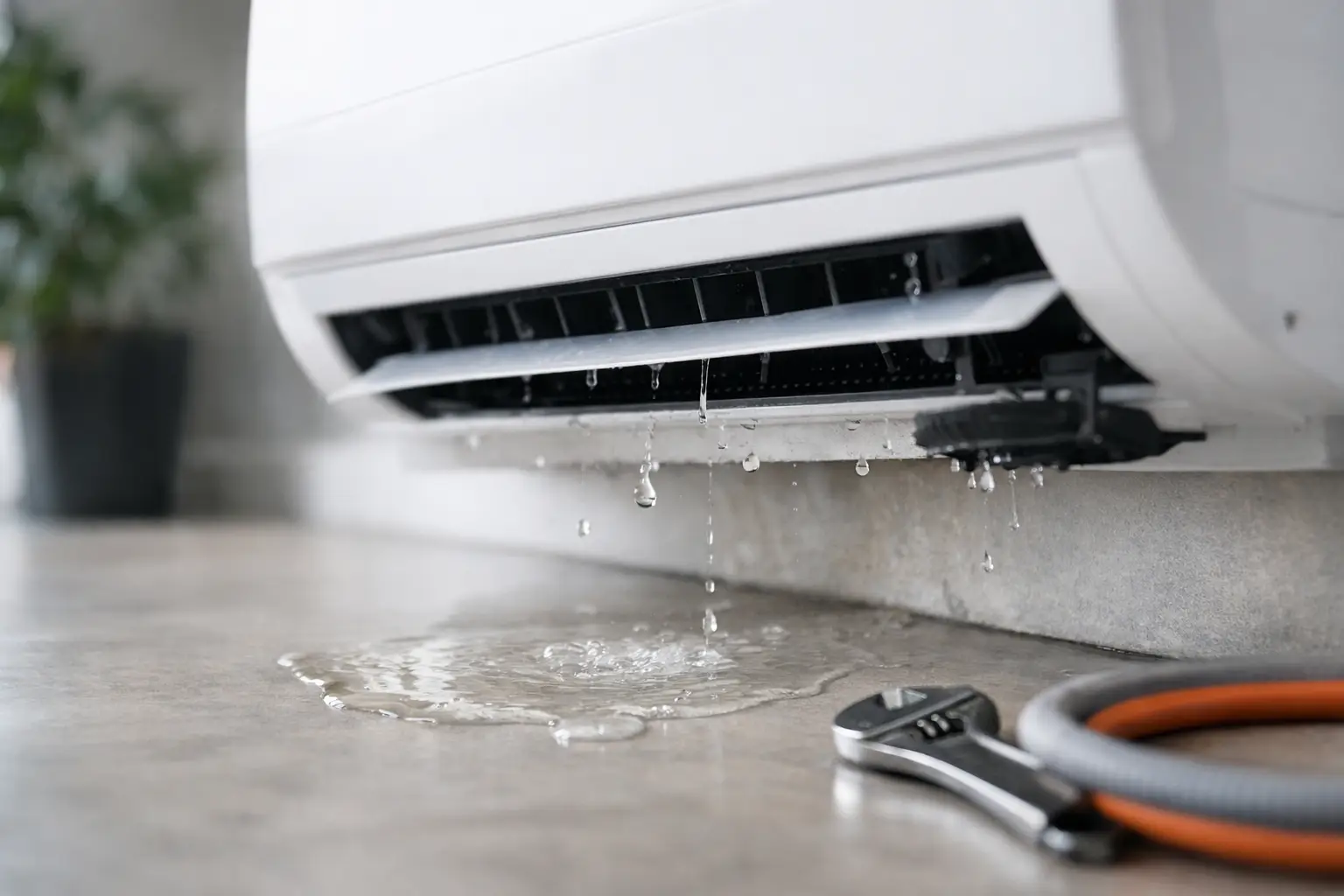
If you found water around your indoor AC unit, your first question is probably simple: why does my AC leak water, and is this a small fix or a sign of bigger trouble? The honest answer is that some causes are minor, but others point to airflow problems, drainage failures, or system damage that should be addressed quickly.
An air conditioner naturally produces condensation while it cools your home or business. Under normal conditions, that moisture collects, drains through the condensate line, and leaves the system without you ever noticing it. When water starts dripping from the unit, pooling in the drain pan, or staining the ceiling below, something in that process is no longer working as it should.
Why does my AC leak water inside the house?
Most indoor AC leaks come back to one of a few issues: a clogged condensate drain line, a damaged drain pan, a frozen evaporator coil, or a problem with installation or maintenance. The key is figuring out which one is actually happening before anyone starts talking about major replacement.
That matters because water around an AC system is not always an equipment-death scenario. Sometimes the fix is as straightforward as clearing a blockage. Other times, the leak is a symptom of something deeper, like low refrigerant, poor airflow, or a neglected system that has been running under strain.
A clogged condensate drain line
This is one of the most common reasons an AC leaks water. Your system pulls humidity out of the indoor air as it cools. That moisture drains away through the condensate line. Over time, algae, sludge, dust, and debris can build up in that line until water can no longer pass through.
When that happens, the water backs up and spills out around the indoor unit. In some homes, you may notice damp drywall, water near the air handler, or a safety switch shutting the system down to prevent overflow.
A clogged line is often repairable without major expense, but it should not be ignored. If the blockage keeps backing water into the system, you can end up with water damage, mold concerns, and repeat shutdowns.
A cracked or rusted drain pan
If your AC is older, the condensate drain pan may be corroded, cracked, or shifted out of position. The pan is supposed to catch condensation and direct it into the drain line. If it fails, water can drip directly into the cabinet or onto surrounding surfaces.
This is more common in aging systems, but newer units can also develop pan issues if they were installed poorly or if the system has had persistent drainage problems. In some cases, replacing the pan solves it. In others, the pan damage is just one sign that the system has had a longer-term moisture problem.
A frozen evaporator coil
This is where the leak can seem confusing. If the coil freezes, you may not see much water at first. Then, when the ice starts melting, the system suddenly releases more water than the pan and drain setup can handle.
Frozen coils usually do not happen randomly. They are often caused by restricted airflow, a dirty air filter, a blocked return, a blower problem, or low refrigerant. That is why simply cleaning up the water is not a real fix. The water is the symptom. The root cause is what needs attention.
Low refrigerant or other performance issues
Low refrigerant can lower coil temperature enough to contribute to freezing, which later creates leaking when the ice melts. This is also one of the situations where homeowners get bad advice. If someone jumps straight from a leak to “you need a whole new unit,” be careful.
Sometimes an older system does make replacement the smarter long-term choice. But a refrigerant issue still needs to be diagnosed properly. A technician should determine whether there is a leak, whether the repair is practical, and whether the rest of the system is in sound enough condition to justify fixing it.
What you can safely check first
Before calling for service, there are a few basic things you can look at without taking the system apart.
Start with the air filter. If it is heavily clogged, airflow may be restricted enough to contribute to a frozen coil. Replacing a dirty filter is simple, low-cost, and part of basic AC care.
Next, look for visible water around the indoor unit or secondary drain pan. If your system is in an attic, garage, or utility closet, check for standing water, rust marks, or overflow. If you can see the condensate drain line outside, notice whether it appears to be draining normally while the system runs.
You should also pay attention to cooling performance. If the AC is leaking water and also not cooling well, freezing, low airflow, or refrigerant issues become more likely. If you see ice on the refrigerant line or indoor coil area, turn the system off and have it inspected. Running it longer can make the problem worse.
What not to do
Do not assume the leak is harmless just because the system is still running. Water damage adds up fast, especially around ceilings, flooring, insulation, and drywall.
Do not keep resetting the system if a float switch is shutting it off. That switch is there to prevent overflow and protect your property.
And do not let anyone treat a water leak like automatic proof that the whole system is done for. Some leaking AC units need major work. Many do not. Honest HVAC service starts with diagnosis, not a sales pitch.
When a leaking AC is an urgent problem
Some water leaks can wait a day for a scheduled visit. Others need faster attention.
If water is actively dripping through a ceiling, near electrical components, or creating slip hazards in a business, it is urgent. The same goes for systems that repeatedly shut off, freeze up, or stop cooling during high outdoor temperatures. Commercial properties also have a lower margin for waiting if indoor comfort affects staff, customers, equipment, or product storage.
In Charlotte-area heat and humidity, a small drainage issue can turn into a bigger repair if left alone. Moisture problems do not usually improve on their own.
How technicians diagnose the real cause
A proper diagnosis should go beyond spotting the puddle. The technician should inspect the drain line, pan, evaporator coil, filter condition, blower operation, system airflow, and overall cooling performance. If freezing is involved, refrigerant levels and leak indicators may also need to be checked.
This matters because the visible leak is only part of the story. For example, clearing a drain line helps if the line is the actual problem. But if the line clogged because the coil has been freezing repeatedly from poor airflow, the blockage may come back unless the airflow issue is fixed too.
That is why technician-led troubleshooting saves money over time. You want the reason for the leak, not just the fastest temporary patch.
Preventing future AC water leaks
The best prevention is regular maintenance and paying attention to early warning signs. A clean filter, clear drain line, properly working blower, and routine inspection of the coil and condensate system go a long way.
If your AC has leaked before, mention that during service. Recurring leaks usually mean there is an underlying cause that was only partially addressed. In many cases, annual maintenance catches drain buildup, airflow restrictions, and developing wear before they lead to overflow.
For homeowners and property managers, the practical rule is simple: if you notice water where it should not be, do not ignore it and do not jump straight to replacement either. Have the system evaluated by someone who is willing to explain what failed, why it failed, and whether the repair makes sense.
At DDL Services, that is how we approach AC problems – real HVAC solutions, not sales pressure. If the issue is repairable, it should be repaired correctly. If replacement is truly the better choice, you should hear that with clear reasons, not guesswork.
A leaking AC is your system telling you something is off. The sooner you find the real cause, the better your chances of avoiding bigger damage, bigger bills, and a lot of unnecessary frustration.