

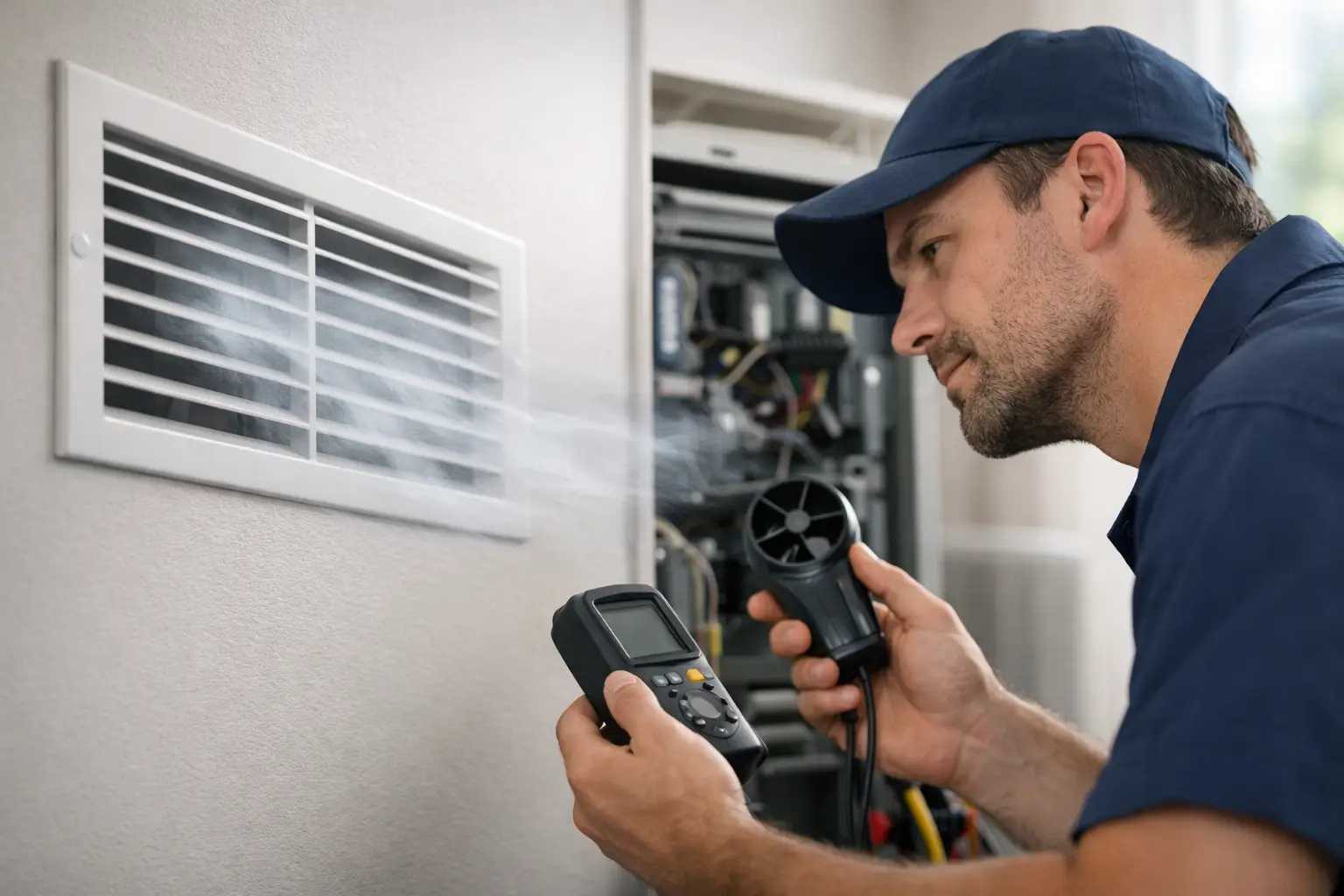
When one room feels stuffy, another never reaches the thermostat setting, and the vents barely seem to push air, the problem usually is not random. If you are wondering how to troubleshoot weak airflow, start by thinking like a technician – follow the path of air from the filter to the blower to the ductwork to the supply vents. Weak airflow is a symptom, not a diagnosis, and that matters because the right fix could be simple or it could point to a system issue that needs professional repair.
How to Troubleshoot Weak Airflow Without Guessing
The fastest way to waste money on HVAC service is to assume weak airflow means you need a new system. Sometimes the problem is as basic as a clogged filter or a closed damper. Other times, the equipment is running but cannot move enough air because of a failing blower motor, a dirty evaporator coil, or duct leakage in the attic or crawl space.
Start with the easy checks first. Make sure the thermostat is set correctly and that the fan settings make sense for the season. Then check every supply vent and return grille you can access. Homeowners are often surprised to find furniture, rugs, curtains, or dust buildup reducing airflow in the very rooms they are worried about.
If the issue affects the whole house or building, the problem is more likely at the equipment or main duct level. If it affects only one or two rooms, the issue may be tied to branch ducts, dampers, vent obstructions, or airflow balancing.
Check the air filter before anything else
A dirty filter is the most common place to start because it is easy to inspect and easy to ignore. When the filter is packed with dust, the system has to work harder to pull air through it. That reduces airflow at the vents and can create bigger problems, including frozen coils and strain on the blower.
Pull the filter out and look at it in good light. If it is coated in dust or you cannot see much light through it, replace it. Also make sure the filter is the correct size and installed in the right direction. An overly restrictive filter can cause problems too, especially if the system was not designed for a high-MERV filter.
That last part is where it depends. Better filtration can help indoor air quality, but not every system can handle a dense filter without sacrificing airflow. If airflow got noticeably worse after a filter change, the filter choice may be part of the issue.
Look at vents, returns, and room conditions
Weak airflow is sometimes a distribution problem, not a system failure. Walk through the property and check whether supply registers are fully open and return grilles are clear. A closed bedroom door can also affect pressure balance, especially in tighter homes.
If one room has weak airflow while others feel normal, compare that room’s vent output to nearby rooms. Listen for air movement. Feel for pressure. Check whether the duct run to that room passes through a hot attic, cramped crawl space, or other area where damage is more likely.
For small commercial spaces, blocked returns are common. Shelving, product displays, or office furniture can reduce the air coming back to the unit, which affects how much air gets delivered.
Common Causes of Weak Airflow in HVAC Systems
Once the basics are checked, the likely causes narrow down quickly. The key is to separate airflow restrictions from equipment problems.
A dirty evaporator coil is a common culprit. Even if the filter has been changed, dust can still build up on the coil over time. When that happens, the system cannot move air efficiently across the coil. You may notice weak airflow, longer run times, or uneven cooling. In more severe cases, the coil can freeze, which chokes airflow even more.
Blower issues are another major category. If the blower wheel is dirty, the motor is failing, the capacitor is weak, or the fan speed is not set properly, the system may run but still move less air than it should. This is one of those problems that often gets missed when someone jumps straight to replacement talk instead of actual diagnosis.
Duct problems are also high on the list. Leaks, disconnected ducts, crushed flex duct, closed dampers, and poor original duct design can all reduce airflow. In older homes and light commercial buildings, duct leakage can be substantial enough that conditioned air never makes it where it is supposed to go.
Then there is static pressure. Most property owners never hear that term until an HVAC issue gets serious, but it matters. If the system is struggling against too much resistance because of duct restrictions, coil buildup, poor filter choice, or undersized returns, airflow drops. A good technician does not guess at this. They test it.
Signs the blower or coil may be the problem
If airflow is weak from every vent, pay attention to how the equipment sounds and behaves. A struggling blower may make unusual noises, cycle oddly, or run with less force than normal. A dirty or freezing coil may show up as weak airflow combined with poor cooling, ice on refrigerant lines, or water around the air handler after thawing.
Do not keep running a system with a frozen coil just to see if it improves. That usually makes things worse. Turn the cooling off and let the fan run if appropriate, then have the system checked.
When ductwork is more likely to blame
If some rooms are consistently uncomfortable while others are fine, ductwork becomes more suspect. You may have a disconnected run, a damper issue, or a design problem that has been there since installation. Additions, renovations, and room layout changes often expose airflow weaknesses that were easy to miss before.
This is also why a bigger unit is not automatically the answer. If the duct system is the actual problem, replacing the equipment without addressing airflow can leave you with the same comfort complaints and a more expensive bill.
What You Can Safely Check Yourself
There is a reasonable line between homeowner checks and technical diagnostics. On your own, you can replace the filter, clear vents and returns, verify thermostat settings, and look for obvious duct damage in accessible areas. You can also pay attention to patterns. Is airflow weak only when cooling? Only upstairs? Only in one zone? Those details help narrow the issue down faster.
You can also check whether the outdoor unit is running and whether the indoor blower seems to come on when it should. But once the problem points toward electrical components, motor performance, refrigerant issues, coil condition, or static pressure, that is no longer a guessing game.
What you should not do is open sealed equipment panels casually, force dampers, or keep replacing parts based on internet advice. Weak airflow has several possible causes, and the wrong fix can waste money while the real issue gets worse.
When to Call a Professional for Weak Airflow
If you have already changed the filter, opened the vents, cleared the returns, and the airflow is still weak, it is time for a proper diagnosis. The same goes for any situation involving ice, burning smells, loud blower noise, water leaks, short cycling, or rooms that have suddenly lost airflow.
A qualified HVAC technician should check more than whether the unit turns on. They should evaluate blower performance, inspect the evaporator coil, test static pressure when needed, inspect accessible ductwork, and determine whether the issue is repairable without jumping straight to system replacement.
That matters for both homes and commercial spaces. A small airflow problem can lead to comfort issues, higher utility costs, and added wear on the equipment. Left alone, it can contribute to compressor damage, frozen coils, poor humidity control, and indoor air quality problems.
At DDL Services, the approach is simple: find the real problem and fix it if it makes sense. Sometimes that means a filter change and duct correction. Sometimes it means coil cleaning, blower repair, or a deeper duct evaluation. And yes, sometimes replacement is warranted – but only when the equipment condition, repair history, and system performance actually support that decision.
Weak airflow is frustrating because it feels vague, but the cause usually is not. Start with the obvious, pay attention to the pattern, and if the basic checks do not solve it, get a technician who treats diagnosis like a service, not a sales pitch.