

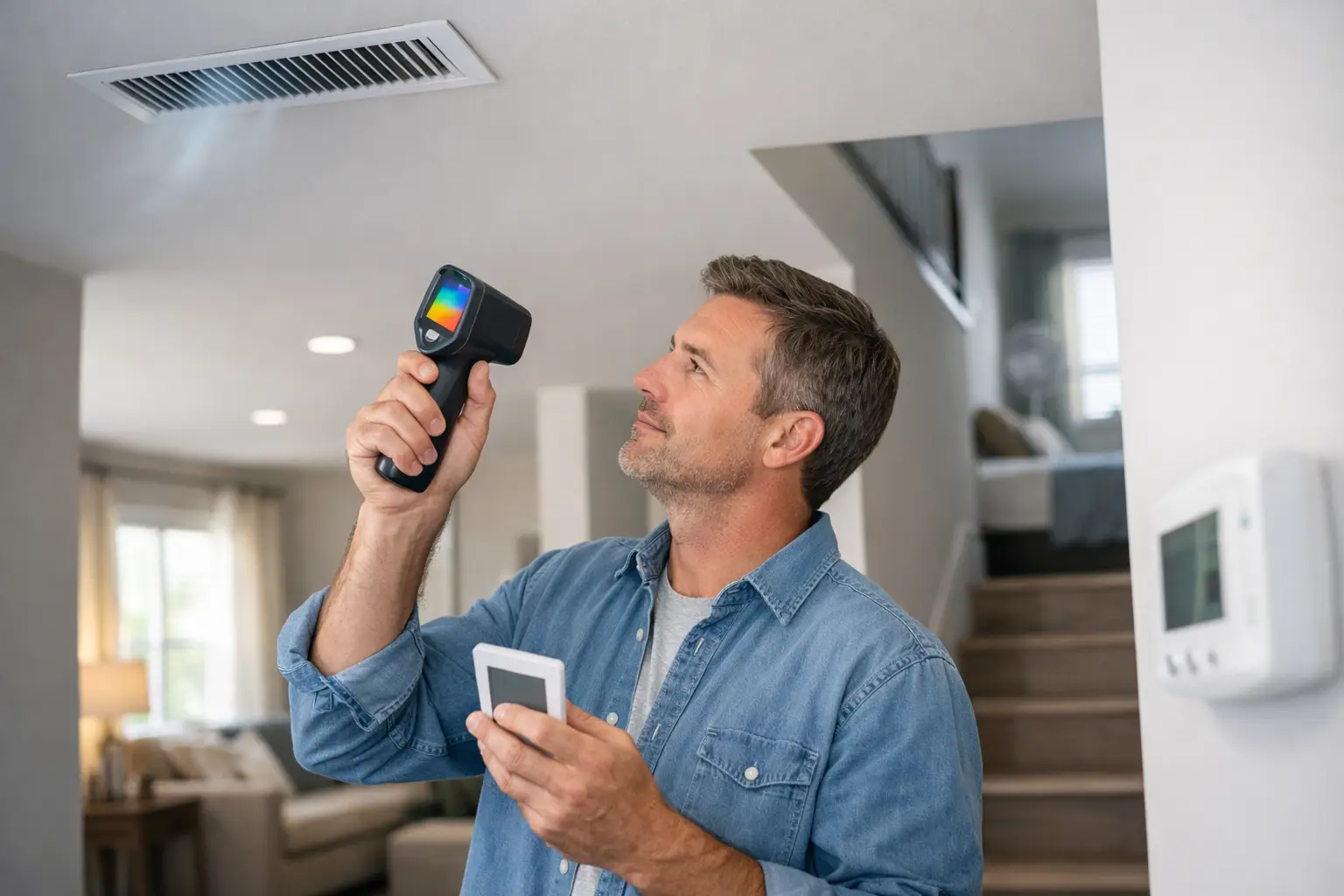
One room feels like a refrigerator, the next feels stuffy, and the thermostat insists everything is fine. If you’re trying to figure out how to diagnose uneven home cooling, start by thinking like a technician, not a salesperson. Uneven cooling usually points to a specific airflow, ductwork, insulation, or equipment problem. The goal is to find the real cause before anyone starts talking about replacing the whole system.
How to diagnose uneven home cooling without guessing
The biggest mistake homeowners make is assuming uneven cooling means the air conditioner is too old or too small. Sometimes that is the issue, but often it is something more targeted and fixable. A closed damper, dirty filter, leaking duct, weak blower, low refrigerant, or poor attic insulation can all create hot and cold spots.
Start with what is easy to verify. Pay attention to whether the problem affects one room, one side of the house, or the entire second floor. That pattern matters. A single hot room usually points to a local issue like restricted airflow, duct leakage, or sun load. Multiple warm rooms may suggest a system-wide problem like low airflow, poor duct design, or equipment performance loss.
Before calling for service, check whether the uneven cooling happens all day or mainly in the afternoon. If rooms only heat up when the sun is strongest, windows, insulation, and attic temperatures may be playing a larger role than the AC itself. If the imbalance is constant, airflow and system performance move higher on the suspect list.
Start with the thermostat and air filter
A thermostat does not read the whole house. It reads the area around it. If the thermostat is in a cool hallway or shaded area, the system may shut off before hotter rooms ever catch up. That does not mean the thermostat is broken. It means its location may not reflect actual comfort in the rooms you use most.
Check the thermostat settings first. Make sure the fan is set correctly and the schedule is not creating unexpected setbacks. If you have a zoning system, confirm each zone is calling properly and that dampers are responding.
Then inspect the air filter. A clogged filter reduces airflow across the entire system, and weak airflow often shows up first as uneven cooling. Upstairs rooms, far-end rooms, and rooms with long duct runs tend to suffer first. If the filter is dirty, replace it and give the system a day or two to stabilize.
This is also where trade-offs come in. High-MERV filters can improve air quality, but on some systems they also add airflow resistance if the equipment is not designed for them. Cleaner air matters, but so does proper airflow. If uneven cooling started after switching filter types, that detail is worth paying attention to.
Check vents, returns, and room airflow
Supply vents should be open and unobstructed. It sounds basic because it is, but furniture, rugs, curtains, and even decorative covers can restrict airflow enough to affect room temperature. Walk room to room and make sure each supply register is open and blowing with reasonable force.
Returns matter just as much. If a room can get air in but cannot move air back out, comfort suffers. Closed interior doors can make this worse, especially in newer, tighter homes. When a bedroom door stays closed, the room can become pressurized, which reduces supply airflow and leaves the space warmer.
A quick check is to compare air movement at different vents with your hand. You are not measuring exact cubic feet per minute, but you are looking for obvious differences. If one room has almost no airflow while nearby rooms feel normal, the problem may be a crushed duct, disconnected branch line, closed damper, or blockage.
Look at where the heat is really coming from
Not every cooling complaint starts at the AC. Some rooms gain heat faster than others. Large west-facing windows, vaulted ceilings, poor attic insulation, recessed lights under a hot attic, and bonus rooms over garages are common trouble spots.
If one room is always hotter in late afternoon, ask whether the room gets more direct sun than the rest of the house. If the answer is yes, the AC may be doing what it can while the building envelope works against it. That does not mean you ignore the HVAC system. It means the diagnosis should include insulation levels, air leaks around windows and doors, and attic heat conditions.
Second floors are a classic example. Heat rises, attic temperatures build, and upper-level ductwork often runs through hotter spaces. Even a properly operating system can struggle if insulation is thin or ducts are leaking in the attic. In that case, replacing the condenser alone will not fix the underlying comfort issue.
Inspect ductwork issues if certain rooms stay warm
Duct problems are one of the most common reasons for uneven cooling, especially in homes where some rooms are far from the air handler. Flexible duct can sag, kink, or partially collapse. Metal ducts can separate at joints. Dampers can be left in the wrong position after prior work.
You may not be able to inspect every section yourself, but if you have accessible attic or crawlspace ductwork, look for obvious disconnects, tears, crushed runs, or heavy air leakage around joints. If a supply duct has come loose, you may be cooling the attic instead of the bedroom below.
Listen for clues too. Whistling near vents can indicate restriction. Rattling in ducts may point to loose sections. A room that gets little air but the system sounds louder than usual may be dealing with pressure problems somewhere in the duct system.
This is an area where accurate diagnostics matter. Homeowners are sometimes told their system is undersized when the actual problem is duct leakage or bad airflow balancing. A larger unit might cool faster in one part of the house while making humidity and comfort worse elsewhere.
Watch for system performance problems
If the whole house feels less comfortable than it used to, the issue may be with equipment performance rather than room-level airflow alone. Low refrigerant, a dirty evaporator coil, a dirty outdoor condenser coil, a failing blower motor, or a weak capacitor can all reduce cooling capacity.
Signs to watch for include long run times, warmer-than-normal supply air, rising humidity indoors, ice on the refrigerant line, or energy bills climbing without a clear reason. Uneven cooling can be the first symptom because weaker systems tend to lose ground in the hardest-to-cool rooms first.
That said, not every long run time is a problem. In peak Charlotte summer heat, a properly sized AC may run for extended periods. The difference is whether it is maintaining set temperature and removing humidity. If it runs constantly and still cannot keep up, that needs a real diagnosis.
When sizing and design are part of the problem
Sometimes the issue traces back to the original design. The system may be oversized, undersized, poorly ducted, or missing proper return air pathways. Additions, finished bonus rooms, enclosed porches, and renovated spaces often create imbalances because the home changed but the duct and load design did not.
Oversized equipment is not a free upgrade. It can short cycle, cool unevenly, and leave humidity behind. Undersized equipment can run nonstop and still struggle in peak weather. Poor duct design can make either problem feel worse.
This is why honest HVAC companies do not jump straight to replacement. If the home has a duct or distribution problem, new equipment alone may not solve comfort complaints. A proper assessment should look at airflow, static pressure, duct layout, insulation conditions, and actual cooling performance.
When to call a professional for uneven cooling
If you have already changed the filter, checked vents, confirmed thermostat settings, and noticed certain rooms still lag badly, it is time for a technician to test the system. The right service visit should focus on measurements, not assumptions. That means checking temperature split, refrigerant performance, blower operation, static pressure, duct leakage clues, and whether the system is delivering the airflow it needs.
For homeowners tired of hearing replacement pitches before anyone inspects the basics, that difference matters. A good technician should be able to explain whether the issue is a repair, an airflow correction, a duct problem, an insulation issue, or a genuine equipment limitation. DDL Services built its reputation around that kind of diagnosis-first approach because uneven cooling is exactly the kind of problem that gets misdiagnosed when companies lead with sales instead of testing.
If your home has persistent hot and cold spots, the smartest next step is not to guess bigger. It is to narrow the problem down room by room, pattern by pattern, until the cause becomes clear. Once you know what is actually wrong, the fix usually makes a lot more sense than the sales pitch.