

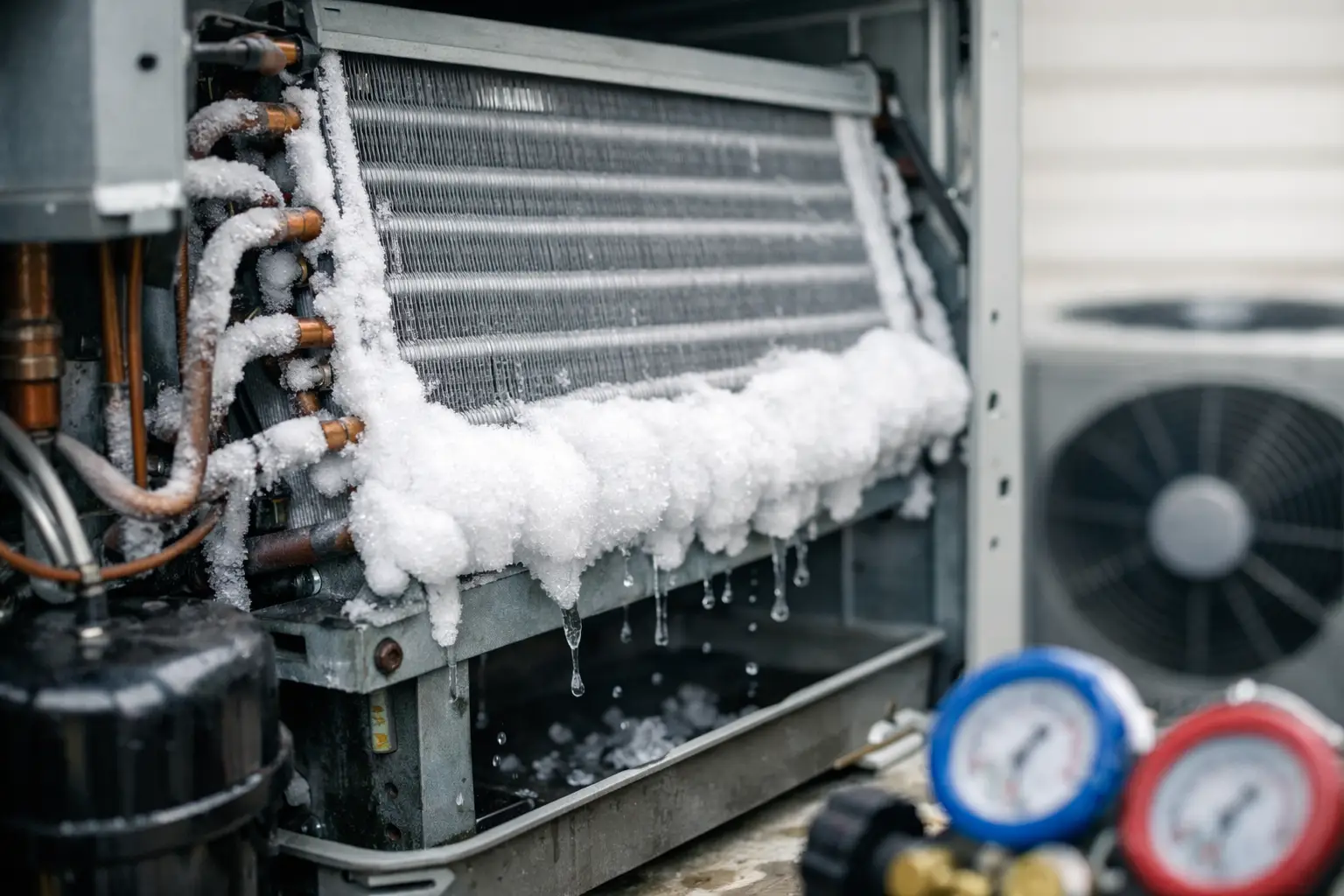
You set the thermostat, expect cool air, and instead find ice on the indoor unit or refrigerant line. If you’re asking, “why is my HVAC freezing,” the short answer is this: your system is not moving heat the way it should. An air conditioner or heat pump can freeze when airflow drops, refrigerant levels are off, or a key component is not doing its job.
A frozen system is not a sign that it is “working extra hard.” It usually means something is wrong, and letting it keep running can turn a repairable issue into a much more expensive one. In homes and commercial spaces, we see this all the time – a small airflow or refrigerant problem gets ignored until the system stops cooling completely.
Why is my HVAC freezing in the first place?
Your HVAC system cools by absorbing heat from indoor air at the evaporator coil. That coil is supposed to get cold, but not so cold that moisture on it turns into a solid block of ice. When not enough warm air moves across the coil, or when the refrigerant pressure falls too low, the coil temperature can drop below freezing. Condensation turns to ice, the ice spreads, and airflow gets even worse.
That is why freezing is often a symptom, not the root cause. The ice you see is the result of a system imbalance somewhere else.
The most common cause is low airflow
Restricted airflow is one of the most common reasons an HVAC unit freezes up. The coil depends on a steady stream of indoor air to keep temperatures in the right range. If that airflow is cut down, the coil gets too cold.
A clogged air filter is the simplest example. When the filter is packed with dust and debris, the blower cannot pull enough air through the system. The same thing can happen with blocked return vents, closed supply registers, dirty evaporator coils, or a blower motor that is slowing down.
In a house, this may start with weak airflow from vents and rooms that cool unevenly. In a commercial space, you may notice hot spots, longer run times, or complaints from certain areas of the building before anyone spots the ice.
Low refrigerant can also make the coil freeze
If airflow is fine, the next major possibility is refrigerant. Low refrigerant does not mean the system “used it up.” Refrigerant operates in a sealed system. If levels are low, there is usually a leak.
When refrigerant charge drops, pressure in the evaporator can fall low enough to make the coil temperature drop below freezing. Moisture builds on the coil and turns to ice. At first, the system may still cool a little. Then performance drops fast.
This is one reason accurate diagnosis matters. Topping off refrigerant without finding the leak is not a real repair. It may get the system running for a while, but the underlying problem remains.
Dirty coils can create the same problem
Even with a clean filter, the evaporator coil itself can collect dust, pet hair, and grime over time. That buildup acts like insulation. Air may still be moving, but not enough heat is transferring to the refrigerant. The coil gets colder than it should and begins to freeze.
Outdoor condenser coils can contribute too. If the outdoor unit is dirty, heat cannot leave the system efficiently. That can throw off pressures and cooling performance, which may show up as icing indoors.
This is one of those situations where maintenance actually matters. A system does not have to be old to freeze. It just has to be dirty enough in the wrong places.
A blower problem can be harder to spot
Sometimes the filter is clean and vents are open, but airflow is still not right because the blower assembly is failing. A weak blower motor, bad capacitor, slipping belt in older equipment, or control issue can all reduce air movement across the coil.
This can be misleading because the system may still turn on and seem normal at first. Homeowners often assume the problem must be refrigerant because the unit runs but does not cool well. In reality, the blower may be the real issue.
That is why freezing problems should not be diagnosed by guesswork. Several different faults can create the same symptom.
Thermostat settings and outdoor conditions can play a role
Not every freeze-up points to a major part failure. Sometimes operating conditions contribute. Running the AC continuously at a very low thermostat setting during mild or cool weather can cause the coil temperature to drop too far, especially at night.
This tends to happen more in spring and fall, or in spaces with unusual cooling loads. If outdoor temperatures are low enough, the system may not be able to regulate evaporator conditions the way it normally would in peak summer heat.
That said, weather alone is not the most common cause. If your system freezes repeatedly, there is usually a service issue that needs attention.
What to do first if your HVAC is freezing up
The first step is to turn the system off at the thermostat and switch the fan to ON if your fan still operates normally. This helps thaw the ice faster. Do not keep trying to force cooling while the coil is frozen. That can stress the compressor and cause more damage.
Next, check the air filter. If it is dirty, replace it. Make sure return vents are not blocked by furniture or boxes, and confirm that supply vents are open. If the area around the indoor unit is accessible, look for obvious signs of water around the drain pan once the ice starts melting.
Do not chip away at ice with tools or try to open sealed refrigerant components. That usually creates a second repair on top of the first one.
Signs the problem is more than a filter
A dirty filter is common, but it is not the answer every time. If you replace the filter, let the system thaw, and it freezes again, something else is likely going on.
Watch for signs like hissing near refrigerant lines, weak airflow even with a clean filter, warm air coming from vents, short cycling, ice returning within hours, or unusually high humidity indoors. Water around the air handler after thawing can also point to drainage issues that need attention.
If you notice any of those, it is time for a proper HVAC inspection. A technician should check airflow, coil condition, blower performance, refrigerant pressures, temperature split, and controls before recommending repairs.
Why honest diagnosis matters with freeze-ups
Frozen HVAC systems are one of those issues that can get oversimplified. Some companies jump straight to replacement because the unit is not cooling and the ice looks severe. But a freeze-up does not automatically mean the entire system is done.
In many cases, the real fix is a coil cleaning, blower repair, refrigerant leak repair, drain correction, or airflow adjustment. There are times when replacement is the right move, especially with major component failure in an older system, but that decision should come after diagnosis, not before it.
That is the approach DDL Services is built around – finding the real problem and fixing it when repair makes sense.
Can a frozen HVAC system damage the equipment?
Yes. The biggest risk is to the compressor. When the evaporator coil freezes, refrigerant conditions throughout the system can shift in ways that put extra strain on major components. The unit also runs longer while doing less actual cooling, which increases wear and energy use.
There is also the water issue. Once the ice melts, excess water can overflow the drain system, affect insulation, stain ceilings, or create moisture problems around the air handler. What starts as an airflow problem can become both an HVAC repair and a property repair.
When to call for service
If the system has frozen more than once, if airflow is weak with a clean filter, if you suspect a refrigerant issue, or if cooling never returns to normal after thawing, call for service. The same applies if this is happening in a business where comfort complaints or downtime affect operations.
A good HVAC repair visit should not start with a sales pitch. It should start with testing. Freezing is a symptom with a handful of likely causes, and the right fix depends on which one is actually present.
If your HVAC is freezing, treat it like an early warning, not a minor inconvenience. Shut it down, let it thaw, check the basics, and if the problem comes back, get it diagnosed before a manageable repair turns into a bigger one.