

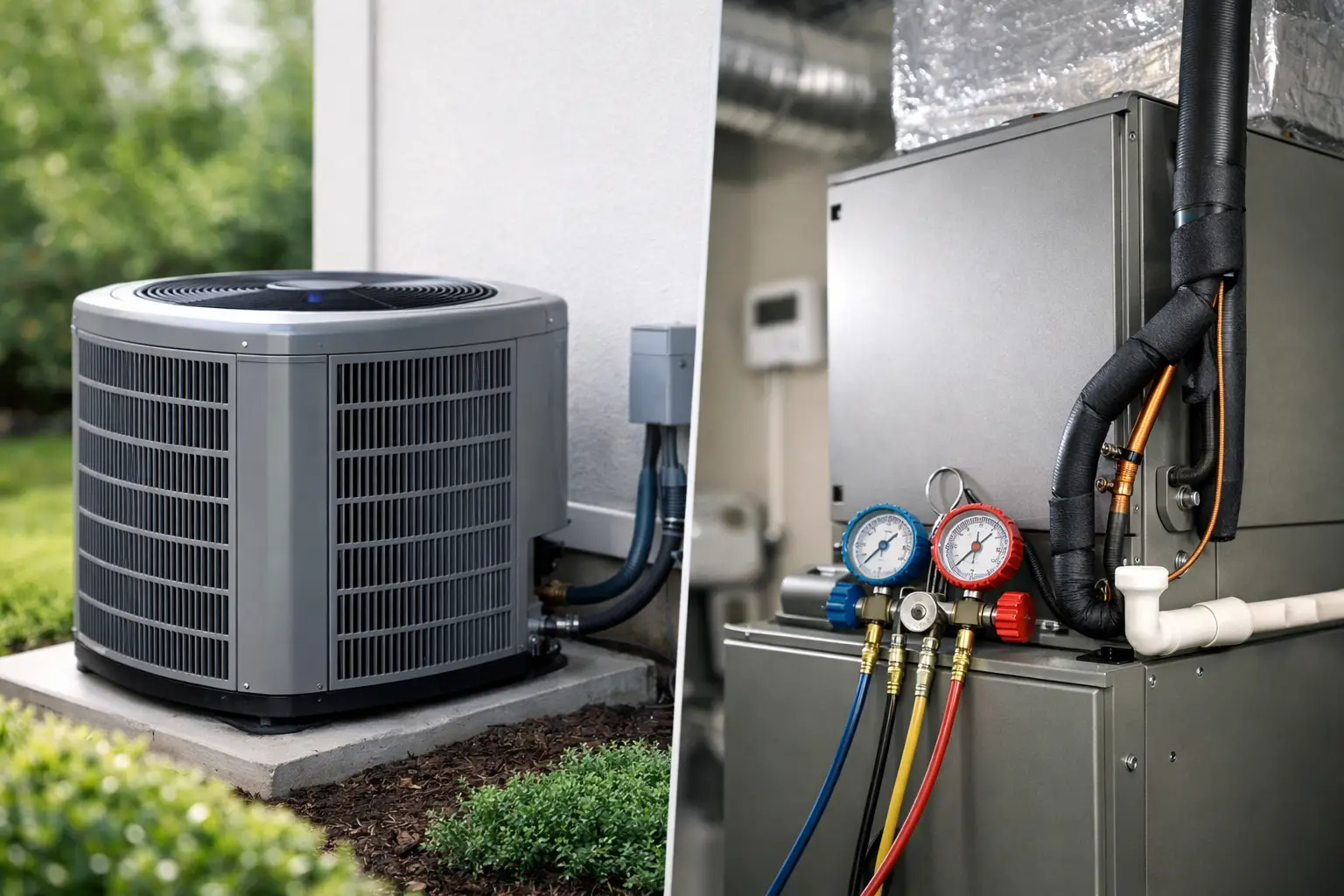
A lot of air conditioning problems start before the system is ever turned on. The equipment gets installed, the house still has hot spots, humidity stays high, energy bills climb, and someone says the unit “just isn’t that good.” In many cases, the real issue is poor matching. This guide to properly matched air conditioners explains what that means, why it matters, and how to avoid paying for a system that never had a fair chance to perform.
What properly matched air conditioners actually means
A properly matched air conditioner is not just an outdoor unit with the right brand name on it. It is a system where the condenser, indoor coil, air handler or furnace, refrigerant setup, ductwork, and overall capacity are selected to work together under real operating conditions.
That matters because air conditioning is a system, not a single box. If one part is oversized, undersized, incompatible, or poorly installed, the whole setup suffers. You can end up with weak airflow, short cycling, poor dehumidification, frozen coils, premature wear, or efficiency numbers that look good on paper but never show up on your utility bill.
This is where homeowners and property managers often get frustrated. They thought they were buying comfort and reliability. What they got was equipment that may be new, but not properly matched to the building or to the rest of the HVAC system.
Why matching matters more than brand alone
Brand matters to a point. Build quality, parts availability, and warranty support all count. But even a good brand can perform badly if the system is mismatched.
A bigger unit is not automatically better. In Charlotte-area summers, oversized equipment can cool the space too quickly and shut off before it removes enough humidity. The thermostat reaches the target temperature, but the building still feels clammy. That is a common complaint in homes and small commercial spaces with incorrect sizing.
Undersized equipment has the opposite problem. It may run for long stretches, struggle in peak heat, and never quite catch up. That constant operation can drive up wear and utility costs. Sometimes the issue is not the equipment size alone. It may be poor insulation, duct leakage, airflow restrictions, or a coil that does not match the condenser correctly.
The point is simple. A properly matched system gives you balanced performance. That means cooling capacity, humidity control, airflow, efficiency, and equipment longevity all have a better chance of landing where they should.
A guide to properly matched air conditioners starts with load calculation
If a contractor recommends a new system after a quick glance at your old unit size, that should raise questions. The old system may have been wrong from day one.
A proper match starts with a load calculation. This looks at square footage, insulation levels, windows, orientation to the sun, ceiling height, occupancy, air leakage, and other factors that affect how much heat enters the building. Residential and commercial spaces both need this kind of real evaluation, even if the details differ.
Rule-of-thumb sizing can miss too much. Two buildings with the same square footage can need very different equipment based on layout, shade, duct design, and construction quality. That is why honest HVAC work begins with diagnosis and measurement, not a sales pitch.
The indoor and outdoor equipment must be compatible
One of the most overlooked issues in air conditioning is mixing components that were never meant to operate together. The outdoor condenser and indoor evaporator coil must be matched according to manufacturer specifications. In many systems, the air handler or furnace also affects performance.
When these components are not paired correctly, efficiency drops and comfort often goes with it. Refrigerant pressures may not stay in the intended range. The system may cool, but not well. It may also become harder to diagnose future performance issues because the installation was compromised from the start.
This is especially important when replacing only one part of the system. Sometimes a partial replacement is a practical and honest option. Other times it creates a mismatch that causes ongoing problems. It depends on the age of the existing equipment, refrigerant type, condition of the indoor section, and whether the combination is actually approved to work together.
Ductwork can make or break the match
You can install quality equipment and still get poor results if the duct system is wrong. Air conditioners need the proper amount of airflow across the coil. If ducts are undersized, leaking, crushed, or poorly laid out, the system cannot move air the way it should.
That can show up in several ways. Some rooms stay warmer than others. The system gets noisy. The coil freezes. Utility bills rise. Comfort drops, even though the equipment itself may be fine.
This is one reason honest contractors do more than swap boxes. They check static pressure, airflow, return and supply conditions, and duct performance. If the system is not breathing correctly, replacing the condenser alone will not solve the root problem.
Proper matching also includes humidity control
In the Carolinas, temperature is only part of the comfort equation. Humidity matters just as much. A house or business can be 72 degrees and still feel sticky if moisture is not being removed effectively.
Properly matched air conditioners are selected and configured to handle both sensible heat and latent heat. In plain terms, they need to cool the air and remove moisture at the same time. That balance depends on system size, runtime, airflow, coil performance, and thermostat setup.
If a system is oversized, it often short cycles and leaves humidity behind. If airflow is too high, moisture removal can suffer. If the building envelope has major leakage issues, even a well-installed system can struggle. Good matching takes all of that into account instead of pretending the condenser tonnage tells the whole story.
Efficiency ratings are only part of the story
Many buyers focus on SEER ratings, and that makes sense. Efficiency matters. But published efficiency assumes the equipment is matched and installed under the right conditions.
A high-efficiency system that is poorly matched can perform worse than a more modest system that is selected and installed correctly. This is where people get burned by flashy sales language. They pay more for premium equipment and never get the expected return because airflow, duct design, refrigerant charge, or component compatibility was wrong.
For some properties, investing in higher efficiency is worth it. For others, a well-matched mid-range system may deliver the better value. It depends on usage patterns, budget, building condition, and how long you plan to keep the property.
Repair versus replacement depends on the real problem
This topic matters because matching comes up most often when people are told they need a full replacement. Sometimes that recommendation is right. Old equipment, major compressor failure, refrigerant phaseout issues, or repeated costly breakdowns can make replacement the smart move.
But not every cooling problem means the entire system is wrong. A bad capacitor, weak blower motor, clogged drain, dirty coil, airflow restriction, or control issue can mimic bigger trouble. Replacing equipment without diagnosing the actual cause is expensive and unnecessary.
That is why a technician-first approach matters. Before talking about new equipment, the real question should be: what failed, why did it fail, and can it be repaired properly? If replacement is needed, then the next step is making sure the new setup is actually matched to the building and the rest of the system.
What to ask before approving an installation
If you are replacing an AC system, ask direct questions. Was a load calculation done? Are the indoor and outdoor components AHRI matched? Is the ductwork being evaluated, not just assumed to be fine? Will airflow be measured? Is the existing furnace or air handler compatible with the new setup? How will humidity control be addressed?
A good contractor should be able to answer those clearly. Not with pressure, not with vague claims, and not by steering every conversation back to the most expensive option.
For homeowners and commercial property operators, that transparency matters as much as the equipment itself. You are not just buying metal and refrigerant. You are paying for judgment, diagnosis, and installation quality.
The best match is the one that fits the building
There is no single best air conditioner for every home or small business. The best match is the one that fits the structure, the occupancy, the duct system, the budget, and the comfort goals.
Sometimes that means replacing more than one component so the system can work as intended. Sometimes it means fixing duct issues before blaming the equipment. Sometimes it means repairing a system that still has good life left instead of pushing a full replacement.
That is the practical value of a guide to properly matched air conditioners. It helps you look past sales talk and ask whether the system is truly designed to do the job. Companies like DDL Services build trust by approaching HVAC that way – find the real problem, explain the options clearly, and recommend equipment only when it actually fits. When cooling is matched correctly, comfort feels normal, bills stay more predictable, and the system has a much better shot at lasting the way it should.