

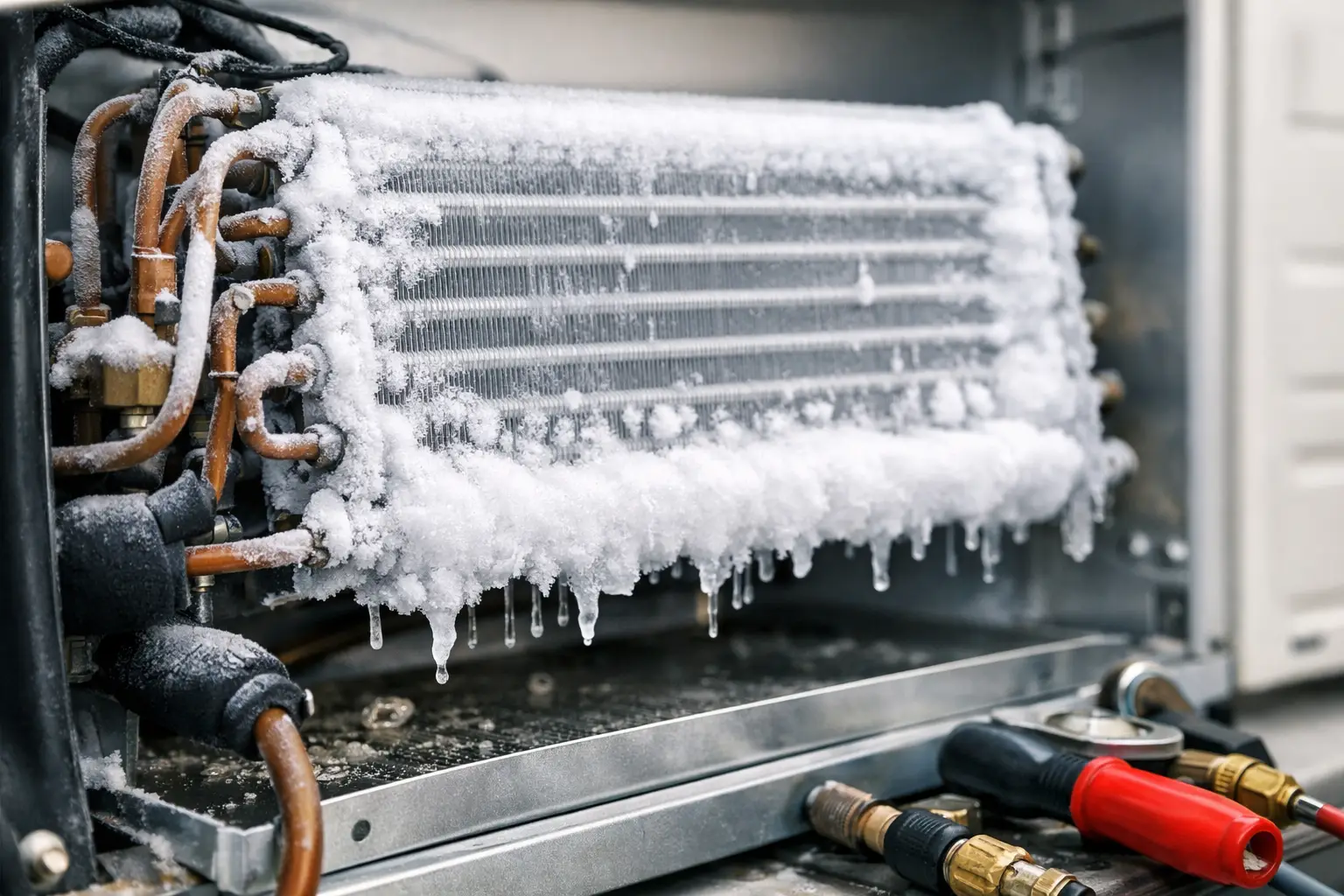
A frozen evaporator coil usually shows up at the worst time – your AC is running, the house feels warmer instead of cooler, and airflow starts dropping room by room. If you’re wondering what causes frozen evaporator coil problems, the short answer is this: your system is either not moving enough air across the coil, or something is throwing off the pressure and temperature inside the refrigerant cycle.
That matters because ice on the coil is not the root problem. It’s the symptom. And this is where a lot of homeowners and property managers get bad advice. A frozen coil does not automatically mean you need a new system. It means the system needs real diagnostics to find out why the coil got cold enough to freeze moisture in the first place.
What causes frozen evaporator coil most often?
In the field, the most common cause is restricted airflow. Your evaporator coil depends on a steady stream of warm indoor air passing over it. That air helps the refrigerant absorb heat properly. When airflow drops too low, the coil temperature can fall below freezing, condensation turns to ice, and the problem starts feeding itself.
A dirty air filter is the simplest example. If the filter is packed with dust, pet hair, or construction debris, the system can’t pull enough air. The same thing can happen with blocked return vents, closed supply vents, a dirty blower wheel, or a blower motor that is weak or failing.
The reason this gets missed is that frozen coils can look dramatic, while airflow issues often look ordinary. A cheap filter that was left in too long can create the same visible ice problem as a more expensive mechanical failure.
Low refrigerant is another major cause
If airflow is fine, refrigerant issues move higher on the list. Low refrigerant can cause pressure in the evaporator to drop. When pressure drops too far, the refrigerant temperature also drops, and the coil can get cold enough to freeze.
This does not mean refrigerant was “used up.” In a properly sealed system, refrigerant does not get consumed like fuel. Low refrigerant usually means there is a leak somewhere. That could be in the coil, a line set connection, or another part of the system.
This is also where honest HVAC service matters. Simply adding refrigerant without identifying the leak is usually a temporary fix, not a repair. The right next step depends on the age of the equipment, the type of refrigerant, leak location, and overall condition of the system. Sometimes the repair is straightforward. Sometimes replacement becomes the practical choice. But you only know that after proper testing.
Dirty evaporator coils can trigger freezing too
The coil itself can become part of the airflow problem. Over time, evaporator coils collect dust and film, especially if filters have not been changed regularly or if the duct system pulls in debris. When that buildup coats the coil, it acts like insulation and interferes with heat transfer.
That means the coil is not absorbing heat the way it should. The temperature can fall too low, ice forms, and cooling performance drops fast. In homes and commercial spaces with indoor air quality issues, heavy occupancy, or inconsistent maintenance, dirty coils are common.
This is one reason routine maintenance matters. It’s not about selling tune-ups for the sake of it. It’s about catching the kind of buildup that turns a repairable issue into a no-cooling call on a hot Charlotte afternoon.
Mechanical problems can reduce airflow without you noticing
Not every airflow issue starts with a filter. Sometimes the blower motor is running weak, the capacitor is failing, or the fan speed is incorrect for the system. In some cases, ductwork restrictions, collapsed flex duct, or undersized returns can choke airflow enough to create freezing.
These issues can be harder to spot because the system may still sound normal. It may even cool part of the house for a while. But if the coil is not getting enough warm return air, ice can start building gradually.
For commercial properties, this can get even more complicated. Tenant buildouts, changed floor plans, or duct modifications can affect airflow balance in ways that were not part of the original design. The frozen coil is the warning sign, but the real problem may be upstream in the air distribution setup.
Thermostat and run-time issues can contribute
A thermostat rarely causes a frozen coil by itself, but it can play a role. If the system runs continuously because of incorrect settings, sensor issues, or a control problem, the evaporator coil stays cold for longer periods. In humid weather, that means more moisture collecting on the coil. If another issue is already pushing temperatures too low, extended run time can make freezing more likely.
This is one of those it-depends situations. Long run cycles during extreme summer heat are not automatically a problem. In fact, steady run time can be normal when the system is sized correctly and outdoor temperatures are high. The issue is when long operation combines with low airflow, low refrigerant, or poor heat transfer.
Outdoor unit problems can affect the indoor coil
People see ice indoors and assume the problem has to be inside. Not always. If the condenser outside is dirty, the fan is not working correctly, or the system has a refrigerant metering problem, pressures can shift in ways that affect evaporator performance.
That’s why real diagnostics matter more than guesswork. HVAC systems work as a cycle. The indoor and outdoor sections affect each other. Replacing one major component or recommending a full new system before checking pressures, temperatures, airflow, and electrical performance is not solid service.
What to do if your evaporator coil is frozen
First, turn the cooling mode off. If the coil is covered in ice, the system needs time to thaw before accurate testing can happen. Running it harder will not solve it. It usually makes the problem worse and can strain the compressor.
If your thermostat has a fan-only setting, turn the fan on to help thaw the coil faster. Then check the filter. If it’s dirty, replace it. Also make sure return vents are not blocked by furniture, boxes, or rugs, and that supply vents are open.
That said, a thawed coil is not a fixed coil. If the system freezes again, or if airflow still feels weak after changing the filter, you need a proper inspection. The key is finding the cause, not just melting the ice.
What causes frozen evaporator coil issues that keep coming back?
Repeat freezing usually means the original problem was never fully diagnosed. Maybe someone changed the filter but missed a blower issue. Maybe refrigerant was added without repairing the leak. Maybe the coil was cleaned, but the duct restriction remained.
This is where homeowners often get frustrated. They pay for a quick visit, the AC works for a few days, and then the same problem returns. Frozen coil complaints are one of the clearest examples of why accurate diagnostics matter more than rushed recommendations.
At DDL Services, that’s the difference in approach. The goal is to identify what actually failed, explain it clearly, and recommend repair or replacement based on condition, not pressure.
Does a frozen evaporator coil mean you need replacement?
No, not by default. Sometimes the fix is as simple as restoring airflow or replacing a failing blower component. Sometimes the issue is a dirty coil or a clogged filter that has been neglected too long. In other cases, a refrigerant leak or aging evaporator coil can make replacement the smarter long-term move.
The real answer depends on cost, system age, refrigerant type, repair history, and overall reliability. If a system is otherwise in good condition, replacing the whole thing because of one frozen coil event may not make sense. If the equipment is older, leaking, and already struggling, replacement may be the more economical path.
That’s why blanket answers are a problem in HVAC. Frozen coil does not equal automatic replacement. It equals diagnosis first.
When to call for service
If your AC is blowing warm air, airflow is dropping, you see ice on refrigerant lines or the indoor unit, or the system keeps freezing after you changed the filter, it’s time to have it checked. The longer a freezing issue continues, the higher the risk of compressor damage, water overflow during thawing, and repeated comfort problems.
A good HVAC diagnosis should explain not just what failed, but why it failed. That’s how you avoid repeat breakdowns and unnecessary spending.
If your evaporator coil is freezing, don’t settle for a sales pitch disguised as service. The right fix starts with someone willing to look at the whole system and tell you the truth about what it actually needs.